In modern laboratories, efficiency, organization, and safety form the core pillars for ensuring smooth experimental operations.
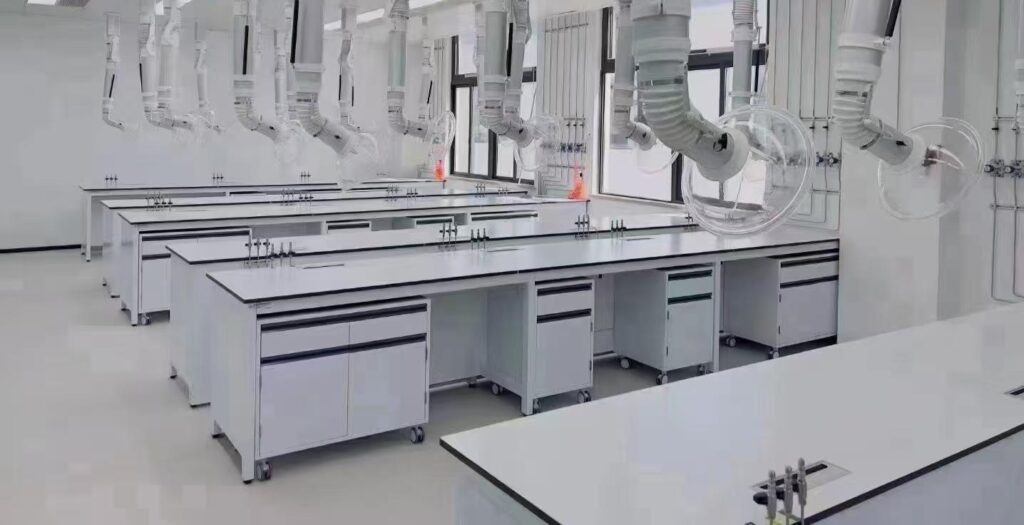
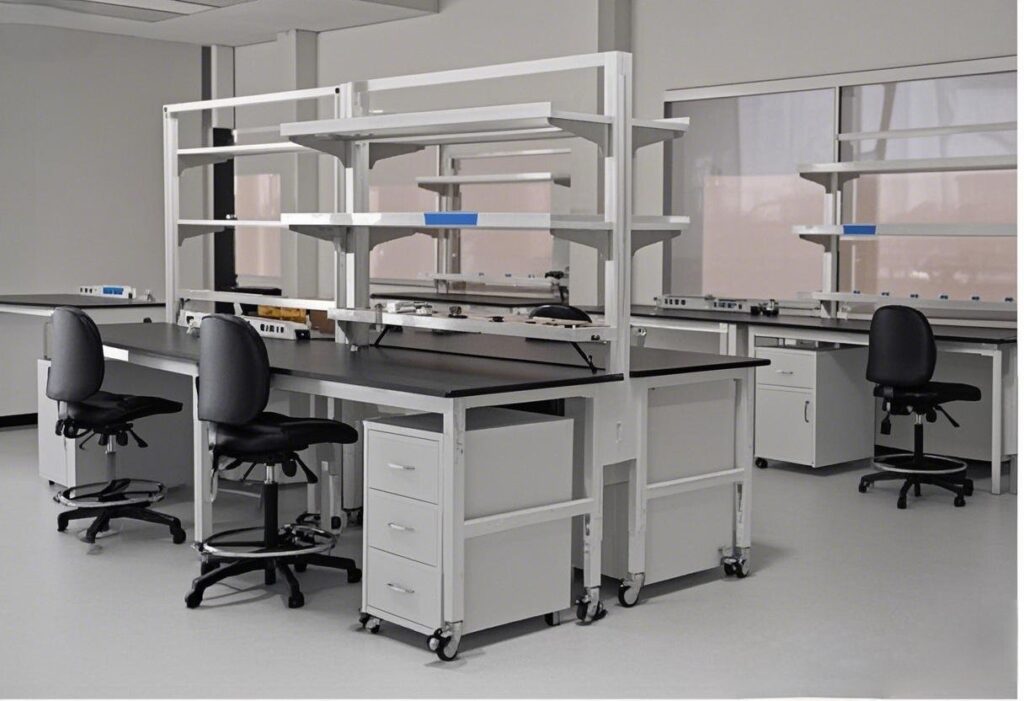
Lab work bench with drawers effectively address countertop storage needs, helping researchers efficiently organize tools, materials, and other essential supplies.
This article will explore the features, advantages, selection tips, and maintenance of lab work bench with drawers, empowering you to make informed choices for your lab setup.
Design Features of Lab Work bench with Drawers
- Durable and Chemically Resistant Materials
The most commonly used materials for lab work bench with drawers include:- Stainless steel: Ideal for laboratories handling corrosive chemicals or requiring high hygiene standards. Stainless steel is easy to clean, rust-resistant, corrosion-resistant, and robust enough to support heavy equipment.
- Epoxy Powder-Coated Galvanized Steel: A popular choice for general research labs, its epoxy powder-coated surface resists chemical corrosion, scratches, and high temperatures. Its non-porous nature prevents chemical and bacterial penetration.
- Wood composite: Cost-effective for teaching labs or facilities handling non-hazardous materials.
- Secure Drawer Locking Mechanisms
For laboratories storing hazardous materials, sharp tools, or precision equipment, drawer locking mechanisms are essential.
Select workbenches equipped with high-quality locks—such as key locks, combination locks, or even electronic locks—to prevent unauthorized access. - Drawer Sliding Systems
Drawer jamming or noisy operation severely disrupts lab environments, interfering with experiments and causing annoyance.
Select workbenches with high-quality drawer slides—such as ball-bearing slides or telescopic slides—ensuring strong load capacity, smooth opening/closing, and full extension for effortless access to items at the back. - Customizable Storage Options
Select based on storage requirements. Common configurations include 2 to 6 drawers. Some designs integrate drawers with cabinet workbenches or shelving lab workbenches to enhance flexibility.
You should select a lab work bench with drawers that offers customizable storage options.
Tailored designs ensure the bench perfectly accommodates your specific equipment and consumables, maximizing available storage space. - Ergonomic Design
Lab personnel often work at benches for extended periods, making ergonomic design crucial for preventing fatigue and injury.
Benches with drawers should feature a comfortable working height, and drawers should be easily accessible without requiring straining or reaching.

Advantages of Lab Work bench with Drawers
- Maximized Work Surface Organization
Lab work bench drawers provide dedicated storage for items such as pipettes and safety goggles.
Storing these essentials in designated drawers, away from the work surface, maintains a tidy bench while reducing the risk of spills or breakage. - Enhanced Experimental Efficiency
Drawers enable rapid access to lab instruments or samples, eliminating time wasted searching for items.
Items can be categorized and stored according to needs, reducing the risk of loss or disorganization during experiments and improving workflow efficiency. - Optimized Work Environment
A tidy work surface minimizes distractions from clutter, allowing researchers to focus on their tasks.
Through categorized storage, drawers effectively prevent cross-contamination between different types of items—a critical consideration in biological or chemical experiments. - Enhanced Safety and Compliance
Lab work bench with drawers ensure secure storage of equipment, minimizing the risk of items falling.
This not only protects both equipment and personnel from potential hazards but also helps laboratories meet industry regulations and standards (such as OSHA guidelines in the U.S. or CE certification requirements in the EU).

How to Choose the Right Lab Work bench with Drawers
- Assess Lab Requirements
- Work Type: What experiments or tasks are primarily conducted in the lab? For example, a lab handling corrosive chemicals requires a workbench with epoxy powder coating. Selecting a workbench material based on specific experimental needs is crucial.
- Storage Requirements: How many small tools and devices need storage? Are lockable drawers required for hazardous materials and documents? List items to be stored in drawers to determine the necessary drawer sizes and quantities.
- Budget: Establish a reasonable budget for drawer-equipped workbench. While stainless steel and epoxy powder-coated galvanized steel are pricier, their superior durability makes them a long-term investment for demanding laboratories.
- Research Reputable Manufacturers
When purchasing lab work bench with drawers, quality and reliability are paramount. Opt for well-established manufacturers with a proven track record and extensive experience in lab furniture. - Consider Customization
If your lab has specific requirements (e.g., custom dimensions, specialized storage options, or integration with existing equipment), consider partnering with manufacturers offering bespoke workbench solutions. - Verify Industry Compliance
Ensure the selected workbench meets relevant industry standards and regulations. For instance, in the U.S., lab furniture must comply with OSHA requirements for safety and chemical resistance.
Compliance safeguards personnel while helping you avoid potential fines or penalties.

Maintenance Tips for Lab Work bench with Drawers
To ensure your lab work bench with drawers remains in optimal condition over time, follow these simple maintenance tips:
- Regular Cleaning
Clean the work surface and drawers regularly to remove chemical spills, dust, and debris. - Lubricate Drawer Slides
To maintain smooth drawer operation, periodically lubricate the slides with a high-quality lubricant (such as silicone spray or machine oil).
Avoid lubricants that attract dust or debris, as this can clog the slides and cause drawer jamming. - Inspect for Damage
Regularly check the lab workbenches and drawers for signs of damage, including cracks, dents, or loose components.
Verify that drawer locks and slides function properly, tightening any loose screws or bolts. - Avoid Overloading Drawers
Each drawer has a maximum weight capacity. Avoid storing excessively heavy items to prevent overloading.
Overloading may damage drawer slides and cause drawers to jam.
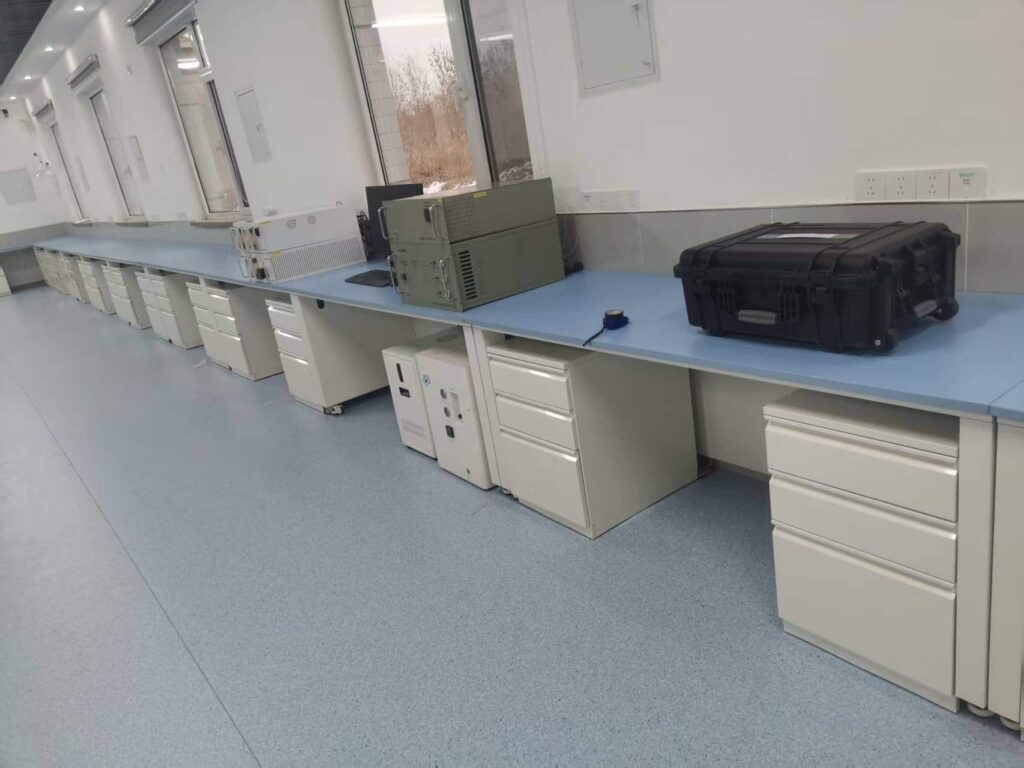
Investing in a drawer-equipped lab work bench supports long-term lab development
Lab work bench with drawers enhance organization by providing structured storage, improving safety, and optimizing space utilization.
When selecting a workbench, consider multiple factors such as your lab’s actual needs, storage requirements for items, and material durability to choose the most suitable work bench for your lab.
With proper maintenance, a lab work bench with drawers will serve your lab for many years.
Through this article, we hope to provide you with a deeper understanding of lab work bench with drawers, enabling you to select the ideal equipment for your labs.