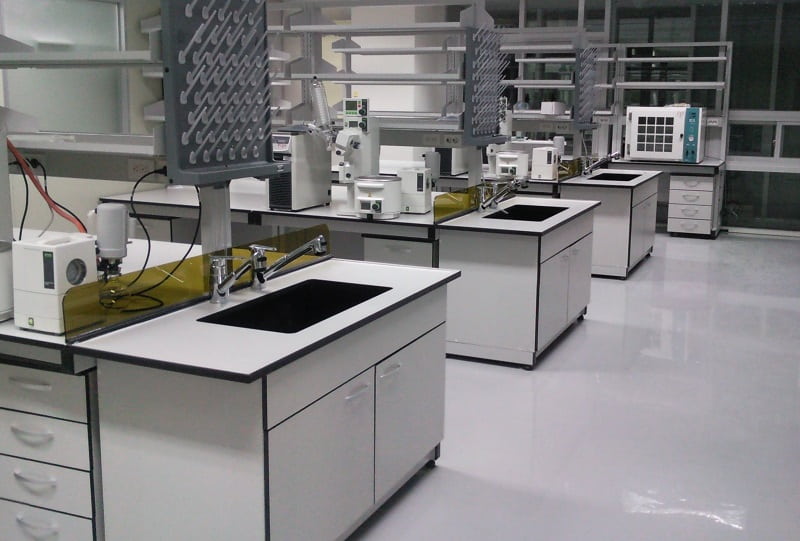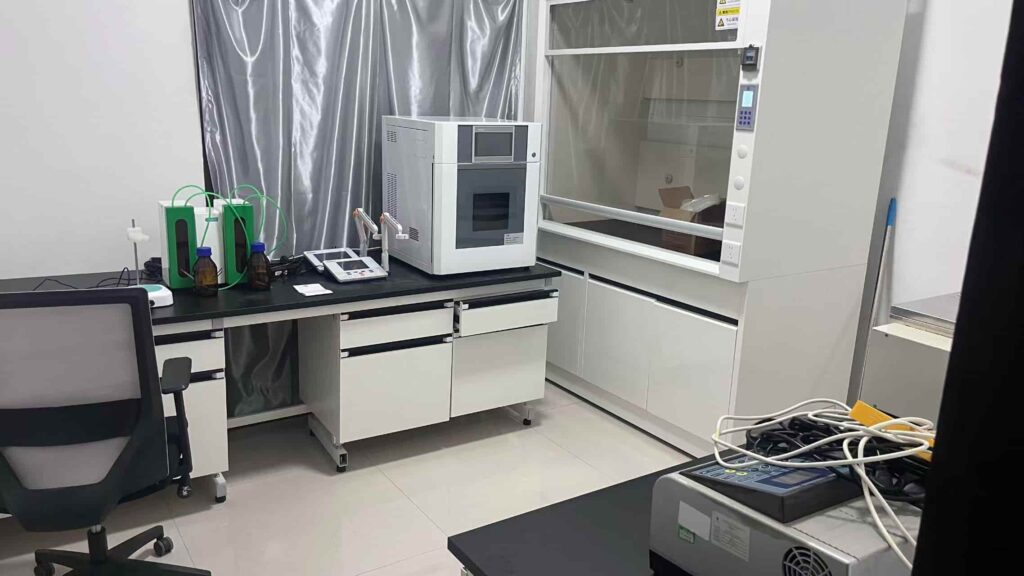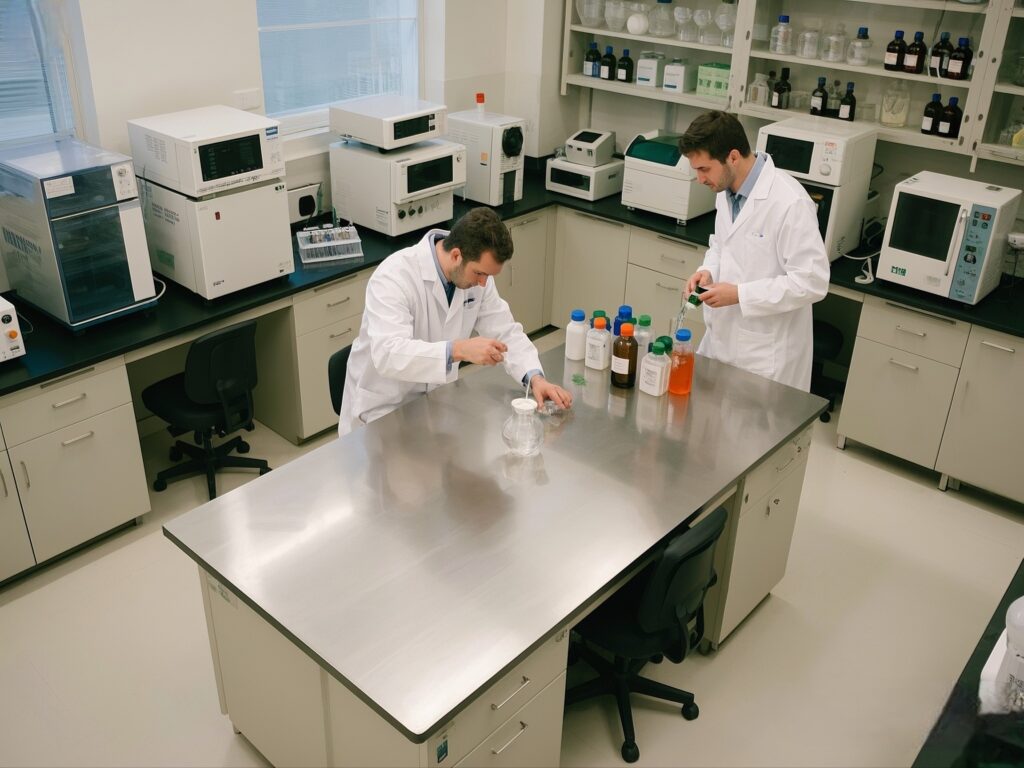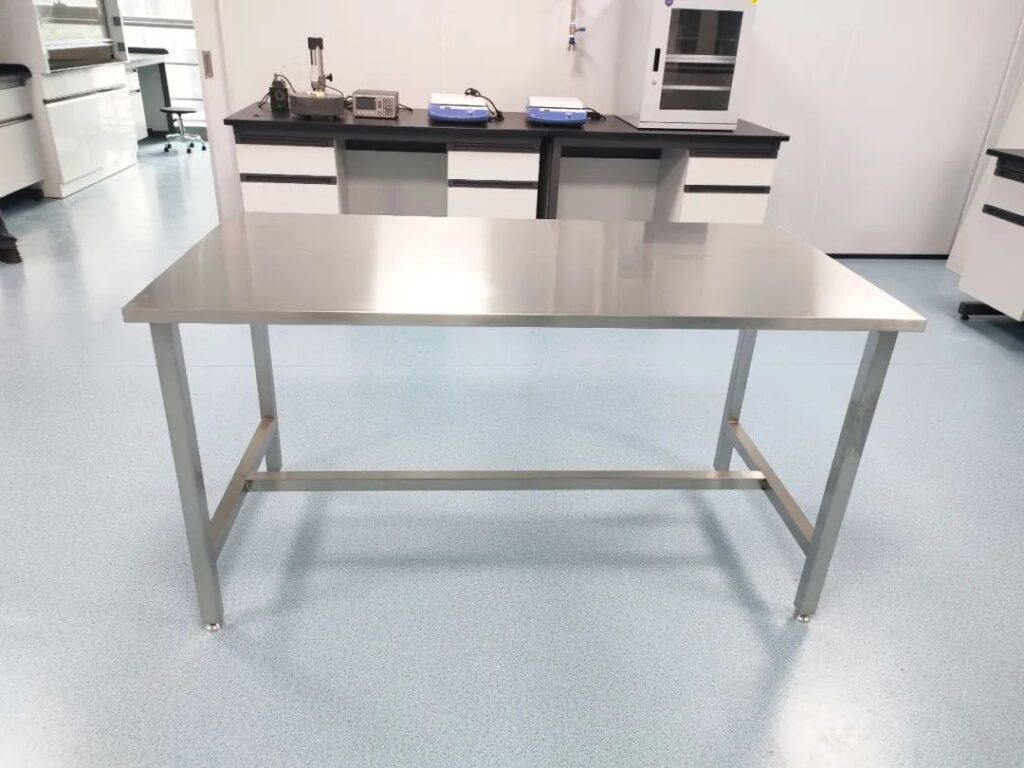
Lab workbenches are a fundamental component of laboratory infrastructure. They serve as the primary platform for equipment operation and daily experimental procedures in both new and renovated laboratories. Common applications include pharmaceutical R&D, third-party testing, and physical and chemical laboratories in universities.
Compared to fixed back panel structures, removable back panels have become a key criterion in lab workbench selection due to their multiple advantages, including flexible installation and removal, ease of pipeline maintenance, and strong adaptability for future modifications.
They allow for flexible laboratory modifications during the later stages of use. This design effectively resolves the challenges of pipeline installation during post-construction upgrades. It transforms ordinary lab workbenches into integrated pipeline carriers.
I. Current Industry Status of Lab Workbenches and Back Panels
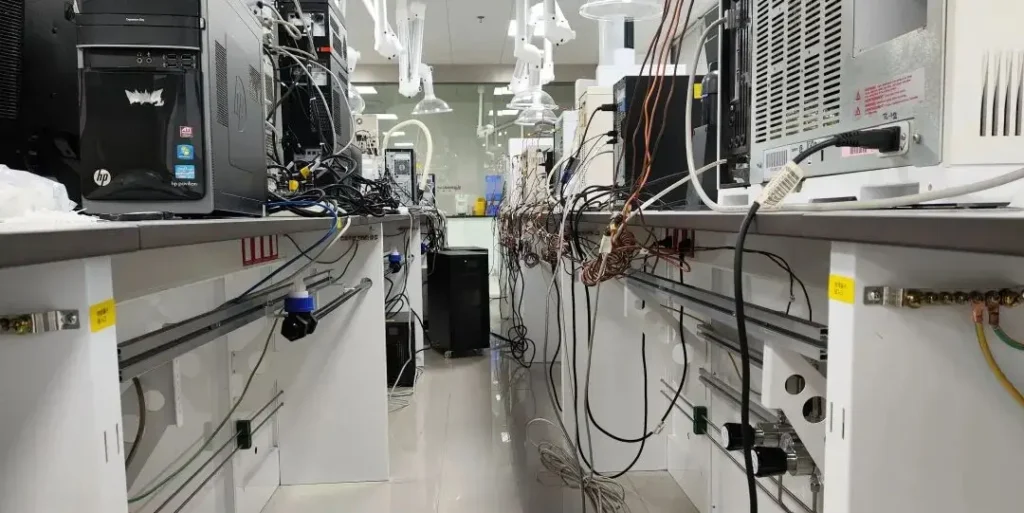
During the early stages of traditional laboratory construction, integrated fixed back panels were commonly used for lab workbenches. The panels were fully enclosed and secured to the rear of the cabinet using rivets, adhesive, or self-tapping screws, creating a sealed cavity at the back.
During the initial construction phase, fixed back panels allowed for quick panel closure and cabinet finishing. However, as the laboratory came into use, problems became increasingly apparent: throughout the laboratory’s operational cycle, new precision chromatographs, spectrometers, and physical and chemical testing equipment are continuously added. The power outlets, high-purity gas valve assemblies, vacuum lines, and cooling water lines required for these devices typically need to be routed through the cavity behind the workbench.
In most projects, after the lab benches are installed and instruments are gradually brought in, clients often require additional gas outlets, expanded power circuits, or modifications to instrument wiring. The integrated, fixed back panel directly blocks the installation path for these lines: if new lines are needed, the back panel must be removed through destructive demolition. This not only damages the anti-corrosion coating and structural stability of the lab bench cabinet but also generates dust and waste that disrupts the laboratory’s clean environment. In some cases, damaged back panels cannot be restored, significantly shortening the equipment’s service life.
With the upgrading of laboratory EHS management standards and the increasing number of laboratory renovation projects year by year, workbenches with removable back panels are gradually replacing traditional fixed-back panel products. Currently, all-steel workbenches are the mainstream choice for laboratories. In pharmaceutical laboratories, quality control laboratories, and research institute projects, the adoption rate of removable back panels has exceeded 90%, making it a standard feature in lab furniture design.
Conventional removable back panels are categorized into three structural types: snap-fit, sliding, and flip-up. All-steel models typically feature tool-free snap-fit assembly or are paired with sliding back panels for removal, adapting to various laboratory operating conditions.
II. Structural Features of Removable Back Panels for Lab Workbenches
(1) Material Selection Suitable for Multiple Scenarios
The material selection for removable back panels is coordinated with the workbench cabinet material: All-steel lab workbench back panels use 0.8–1.0 mm galvanized steel sheets, treated with acid washing and phosphating, followed by epoxy powder coating, making them resistant to acids and alkalis, as well as moisture and rust. The sheet thickness is set according to industry standards, balancing structural strength with ease of installation and removal. This prevents installation and removal from becoming laborious due to excessive weight or deformation caused by excessive thinness.
(2) Modular Installation and Removal Design
- Tool-Free Snap-Fit Type: The back panel is equipped with corrosion-resistant engineering plastic snap-fits around its perimeter. These snap-fits engage in grooves in the workbench frame, allowing the entire panel to be removed by hand without the need for tools such as screwdrivers or wrenches. A single person can complete the installation or removal of a single back panel in just 3 minutes. This is the preferred structure for pharmaceutical cleanrooms, as it prevents tools from bumping into and contaminating the work surface and instruments.
- Sliding Type: Grooves are fixed on the top and bottom of the workbench crossbeam, into which the back panel is inserted. By sliding the back panel sideways, maintenance of internal piping can be performed even when the back of the workbench is flush against a wall or utility shaft, making it ideal for workbenches placed against a wall.
- Single-Side Hinged Flip-Up Type: One side of the back panel is connected to the cabinet frame via corrosion-resistant stainless steel hinges, while the other side features a latch. Upon releasing the latch, the back panel flips outward. This design is ideal for inspecting piping on both sides of central lab benches; when opened, the rear piping is fully exposed, facilitating routine inspections, leak detection, and modifications.
(3) Integrated Utility Channel in the Rear
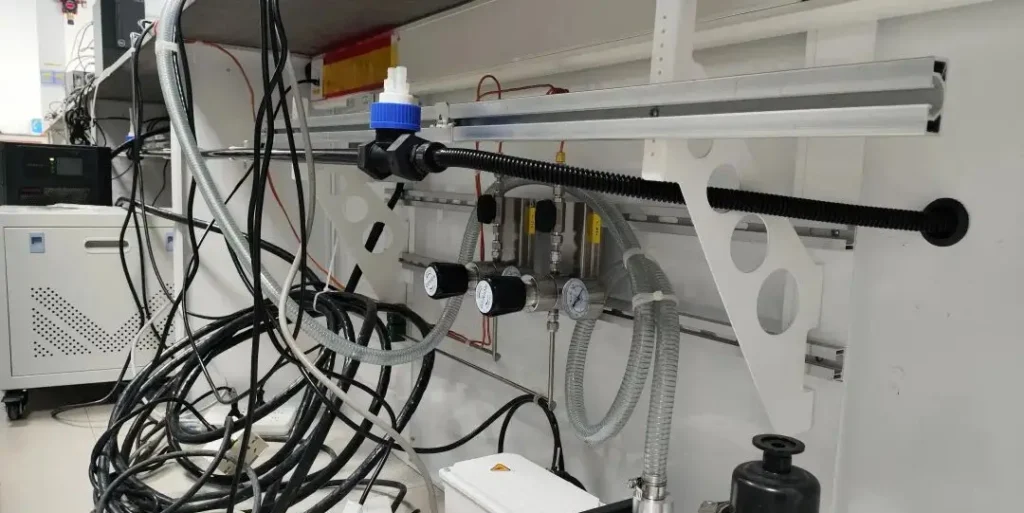
A standard 8–12 cm utility channel is reserved between the removable back panel and the cabinet’s rear frame. This channel serves as a dedicated storage space for electrical outlets, gas valve assemblies, instrument cables, and vacuum lines. All piping is concealed behind the back panel, keeping the external work surface neat and aesthetically pleasing. This design eliminates safety hazards associated with exposed piping—such as damage from collisions, aging wiring causing electrical leaks, and gas leaks from damaged hoses—and meets the requirements for a clean and standardized laboratory environment.
III. Key Advantages of the Removable Back Panel for Lab Workbenches
(1) Convenient Pipeline Maintenance and Operation, Avoiding Destructive Renovations
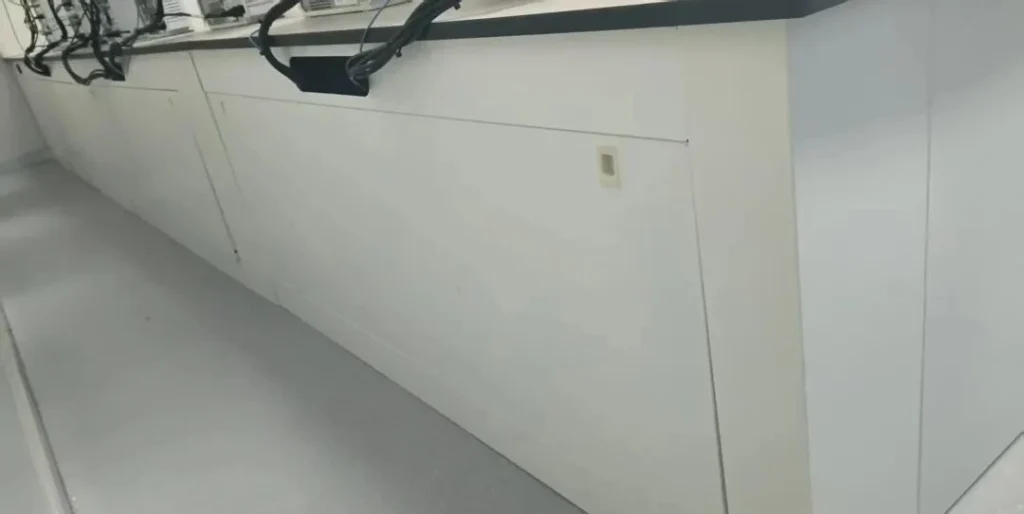
This is the core advantage of the removable back panel. The removable back panel can be disassembled in sections or as a whole as needed. When adding new power outlets, installing high-purity nitrogen/argon gas valve assemblies, or modifying vacuum pump lines during later stages of laboratory operation, simply remove the corresponding back panel to access the cavity for installation.
After completion, reinstall the back panel, causing zero damage to the cabinet or panels. This significantly reduces construction costs and downtime associated with laboratory renovations and expansions, enabling pipeline modifications with zero operational downtime. During routine inspections, laboratory maintenance personnel can periodically remove the back panels to check for potential hazards such as aging wiring, gas line leaks, and loose connections. This allows for the early elimination of electrical and gas leakage safety risks, thereby enhancing the laboratory’s EHS management.
(2) Adapting to Dynamic Laboratory Upgrades and Flexible Functional Expansion
In modern laboratories, experimental projects evolve rapidly. It is common for existing instruments to be phased out and replaced, and for new testing projects to require supporting equipment, leading to corresponding increases or decreases in the number of required pipeline connection points. The modular design of the removable back panel allows for the addition of utility points and the adjustment of outlet and gas valve layouts at any location within the rear cavity without altering the main structure of the lab bench.
A single workbench can sequentially accommodate the operational needs of various instruments, such as liquid chromatography, gas chromatography, and elemental analysis. This enables cross-project reuse of a single workbench, extending its service life and reducing the cost of repeated equipment procurement for the laboratory.
(3) Optimizing Cleaning and Moisture-Proof Maintenance to Extend the Life of the Laboratory Bench
In daily laboratory operations, reagent spills and water vapor condensation are common. Moisture can easily seep into the rear of the cabinet along the piping. With a fixed back panel, water and dirt accumulate in the sealed cavity and cannot be cleaned, leading over time to mold growth on the cabinet panels and rust on all-steel cabinets. Removable back panels allow for complete disassembly at regular intervals to clean accumulated waste liquids, dust, and condensation from the cavity.
This enables moisture-proof and anti-corrosion maintenance of the cabinet frame and piping, keeping the rear cavity dry and clean, thereby extending the workbench’s service life by more than 30%.
(4) Efficient Troubleshooting and Maintenance, Reducing Laboratory Downtime Losses
Sudden power outages and abnormal gas line pressure are common issues in laboratories, with most faults originating from the piping within the cavity behind the workbench. Fixed back panels require demolition to locate faults, resulting in lengthy construction periods and prolonged equipment downtime.
Removable back panels allow for quick disassembly and reassembly, enabling maintenance personnel to rapidly identify short circuits and gas leaks, perform repairs, and restore operations. This minimizes equipment downtime, ensuring the continuity of research, testing, and pharmaceutical quality control work. For quality control laboratories in mass-production pharmaceutical companies, this effectively mitigates production delays and associated losses caused by equipment downtime.
(5) Flexible Relocation and Reconfiguration to Adapt to Laboratory Space Adjustments
Universities and R&D companies frequently adjust laboratory layouts and reorganize experimental zones, requiring the relocation of entire workstations. Removable back panels can be completely detached and packed separately, reducing the overall volume of the workstation during relocation and lowering the risk of damage from bumps during transport; upon arrival at the new location, the workstation structure can be restored by simply reassembling the back panels.
Some modular lab benches can be disassembled into individual cabinet units and reassembled. The removable back panels, combined with the ability to separate cabinet units, facilitate flexible adjustments to the laboratory layout.
(6) Strong Compatibility for Retrofitting Accessories
In addition to water, electricity, and gas lines, laboratories often install auxiliary components such as explosion-proof junction boxes, gas leak detectors, and instrument grounding terminals.
The inner compartment of the removable back panel provides ample installation space; after removing and reinstalling the back panel, various accessories can be freely mounted. All accessory wiring is concealed within the back panel, freeing up countertop workspace. This keeps the work area tidy, adheres to ergonomic design principles for laboratory countertops, and ensures that laboratory personnel can move freely without interference from pipes or cables.
IV. On-site Applications of Workbenches with Removable Back Panels in Various Settings
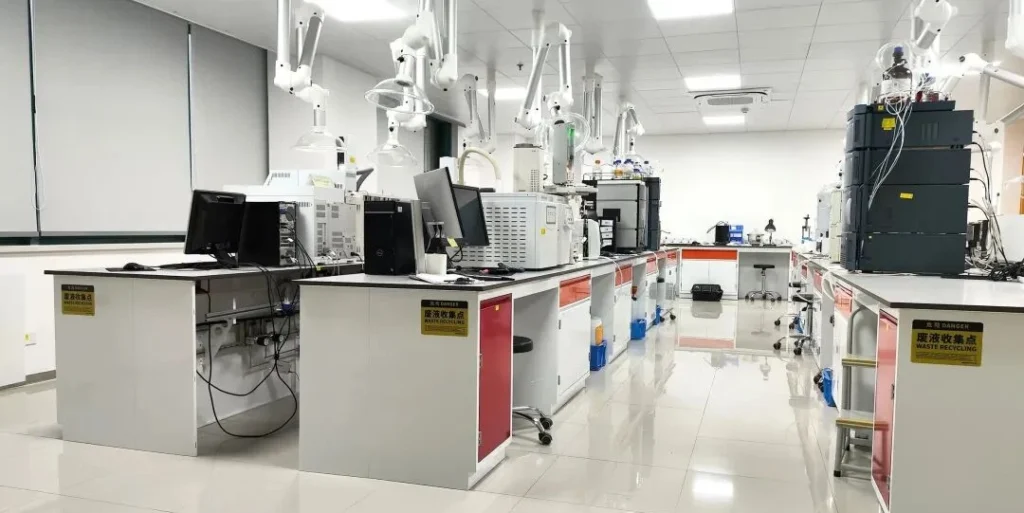
(1) R&D / QC Laboratories in Pharmaceutical Companies
Pharmaceutical laboratories are subject to stringent compliance requirements. GMP regulations explicitly mandate neat and easily accessible piping for maintenance, making all-steel snap-fit workbenches with removable back panels the preferred choice. When adding gas and electrical lines for new liquid chromatography or mass spectrometry instruments, the back panel can be installed or removed without tools.
This ensures no contamination of the clean area during installation and allows for rapid restoration afterward, meeting the dust-free control standards of clean laboratories. The rear cavity uniformly houses high-purity gas lines and explosion-proof power lines, reducing the risk of electrical fires and gas leaks in environments with organic solvents.
(2) Third-Party Testing and Inspection Laboratories
Third-party laboratories undertake testing tasks across multiple industries, where instrument types frequently change. Sliding-track removable backplate workbenches are designed for wall-mounted configurations; even when the workbench is flush against the wall, the backplate can be pulled out from the front to modify piping. A single workbench can be used to rotate between testing food, environmental, and chemical samples, flexibly adapting to the wiring requirements of different instruments.
(3) University Physics and Chemistry Teaching Laboratories
University laboratories purchase new teaching instruments annually to keep pace with curriculum updates. Due to high usage frequency and the risk of wiring malfunctions caused by student operations, flip-up removable back panels allow instructors to quickly inspect and repair wiring. Regular removal of the panels also facilitates cleaning of water accumulation and stains inside the cabinets. This design balances teaching needs with low-cost maintenance, meeting the budget control requirements of educational institutions.
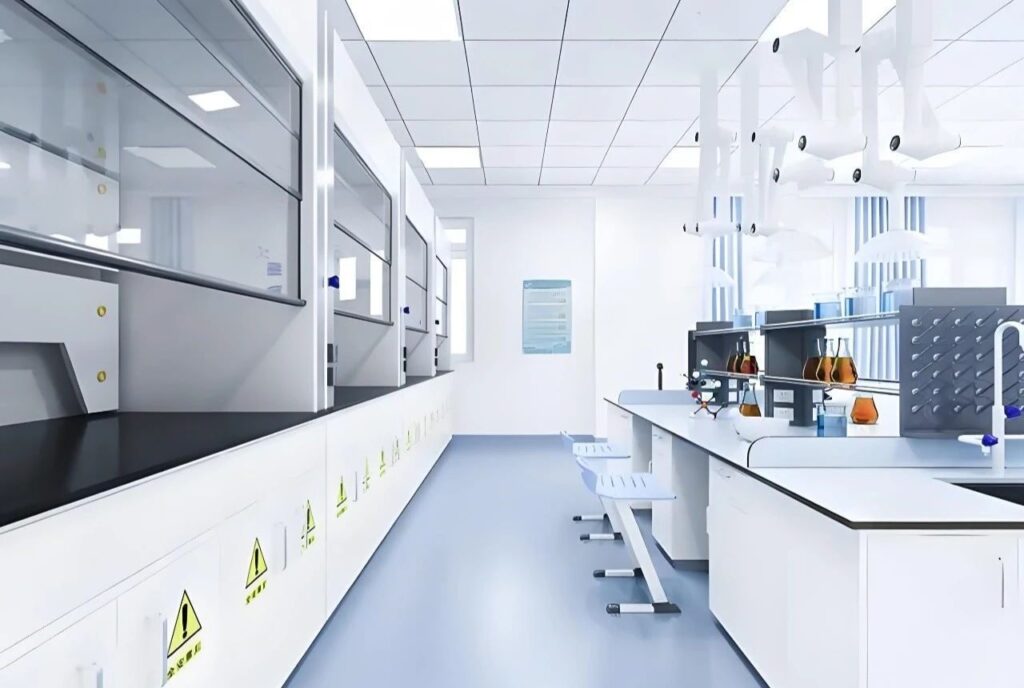
V. Industry Development Trends: Removable Back Panels Become the Standard for Laboratory Workbenches
Having evolved from an optional feature to an industry standard, the widespread adoption of removable back panels is a concrete manifestation of refined laboratory management and the implementation of full lifecycle operation and maintenance concepts.
Future lab workbench designs will iterate and upgrade upon the removable back panel foundation: The back panel will feature pre-reserved modular cutouts, allowing sockets and gas ports to be added as needed without drilling or damaging the panel; they will be paired with transparent inspection access panels, allowing visual inspection of critical pipeline locations without fully removing the back panel; the back panel’s interlayer will feature partitioned cable channels and gas tube slots, enabling the separate routing of electrical and gas lines and further optimizing the standardization of rear pipeline layout.
For laboratory builders and equipment purchasers, prioritizing removable back panels laboratory workbenches in new construction or renovation projects involves a modest increase in initial procurement costs. However, this choice can significantly reduce renovation costs and downtime losses over the subsequent decades of laboratory operation and maintenance, making it a cost-effective solution that balances short-term investment with long-term usability.