Choosing the right lab workbenches is crucial. Lab workbenches are core equipment in any lab and directly impact experimental safety, operational efficiency, and service life. In various settings—such as chemistry, biology, pharmaceuticals, and food testing—selecting the appropriate workbench type can significantly enhance cleanliness, corrosion resistance, or high-temperature resistance, while also optimizing storage space, lighting, and access to water and electricity.
This article provides a comprehensive analysis of laboratory bench types based on materials, layout, structure, and other functional features to help you make an informed choice based on your specific needs. Whether for a standard physical and chemical laboratory or a high-end cleanroom, you can find a suitable solution.
For internationally recognized lab workspace safety design principles, you may review resources from International Laboratory Management Association.
I. Types of Lab Workbenches by Material
The primary materials used for lab workbenches include steel (galvanized steel), PP (polypropylene), and stainless steel (304/316). Each material has its own strengths in terms of acid and alkali resistance, high-temperature performance, and suitability for clean environments.
1. Steel Workbenches (Galvanized Steel)
Advantages: Sturdy structure with high load-bearing capacity (300 kg per square meter); surface treated with epoxy powder coating for excellent rust and corrosion resistance; high cost-effectiveness; and outstanding fire resistance.
Applications: Suitable for general chemistry laboratories, physics laboratories, and general science and physics labs in universities. Ideal for holding standard glassware, reagent bottles, and small analytical instruments. Provides additional storage space and facilitates daily cleaning.
The entire system features a modular design with high expandability, making it adaptable to various experimental and teaching scenarios. It is well-suited for teaching laboratories with limited budgets.
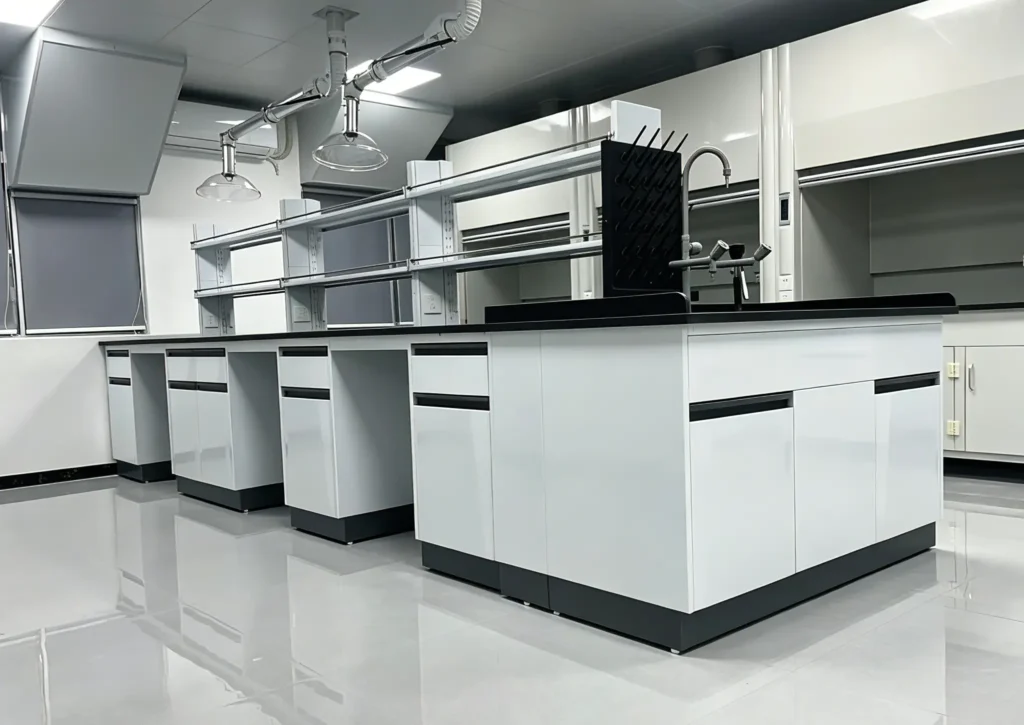
2. PP Workbenches (Polypropylene)
Advantages: Extremely corrosion-resistant; withstands strong acids, strong alkalis, organic solvents, and moisture. No metal corrosion occurs even upon contact with highly corrosive agents such as hydrofluoric acid.
Applications: Highly corrosive environments such as chemical QC, waste liquid treatment areas, and chemical waste disposal zones, reducing the risk of contamination.
Features a one-piece molded structure that is completely waterproof. Suitable for research laboratories with higher budgets.
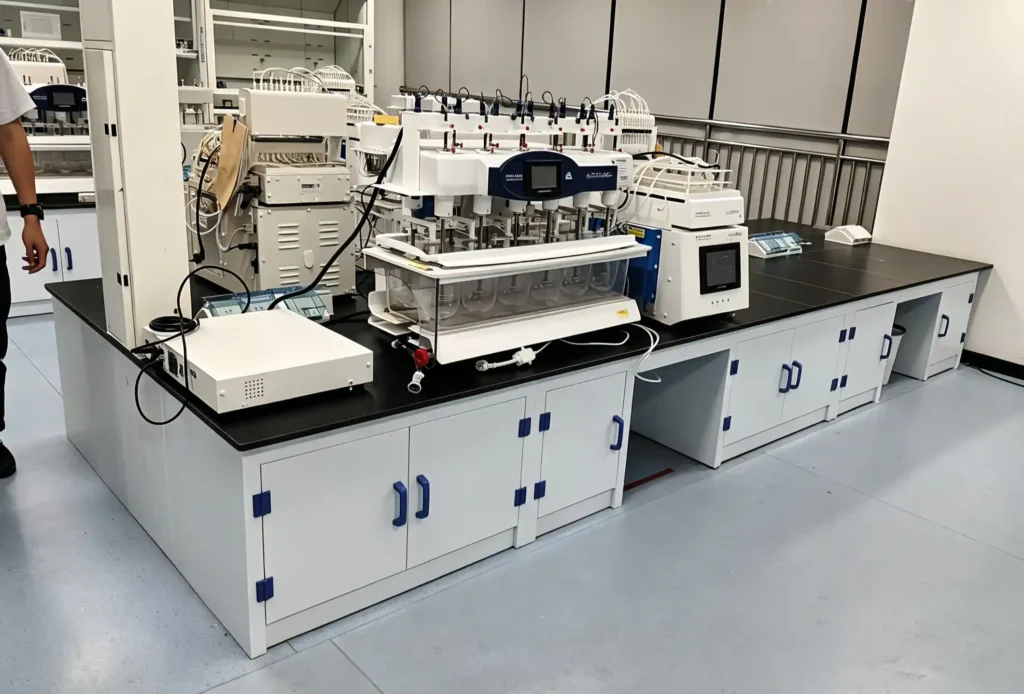
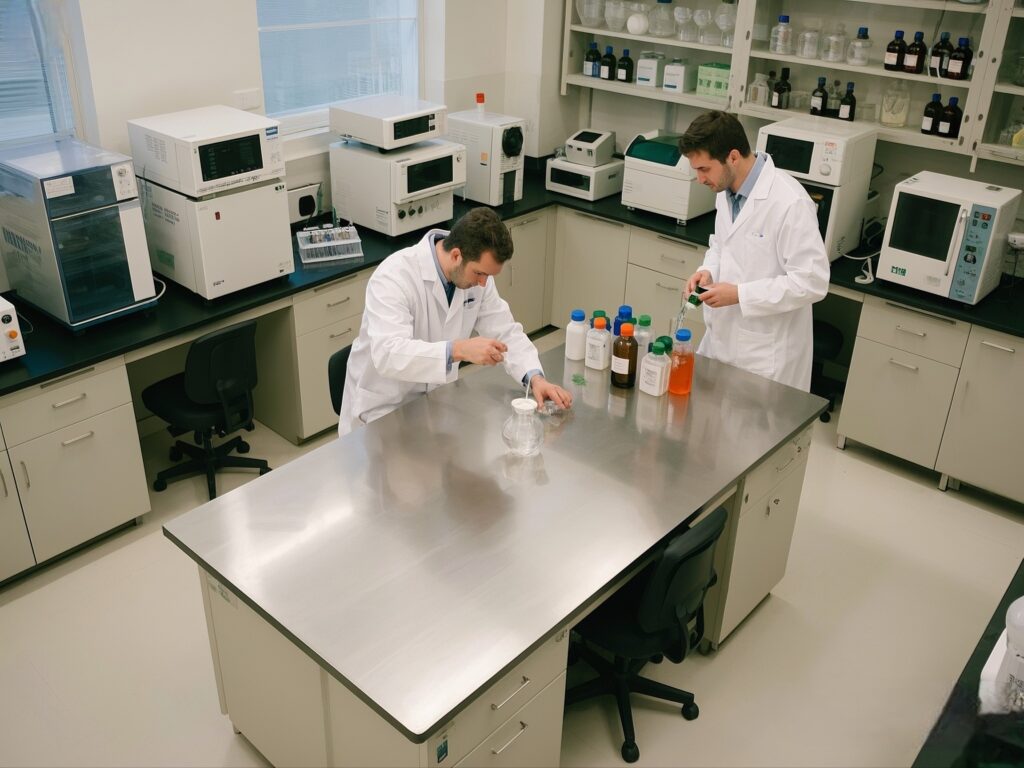
3. Stainless Steel Workbenches (304/316)
Advantages: Strong antimicrobial properties, easy to clean and disinfect, high-temperature resistance (up to high temperatures), smooth surface that prevents dirt buildup, corrosion resistance (316 offers greater resistance to chloride ions), and extremely high cleanliness.
Applications: Food testing, hospital laboratories, pharmaceutical cleanrooms, and sterile biological laboratories. Particularly suitable for environments requiring frequent sterilization and high hygiene standards, with convenient integration of water and electrical systems.
Seamless welding and a brushed finish eliminate hygiene dead zones and inhibit bacterial growth. Suitable for housing various types of precision equipment. Ideal for pathology laboratories with higher budgets.
Why choose stainless steel lab workbenches? Their superior cleanliness and durability make them the top choice for high-end laboratories. Read more.
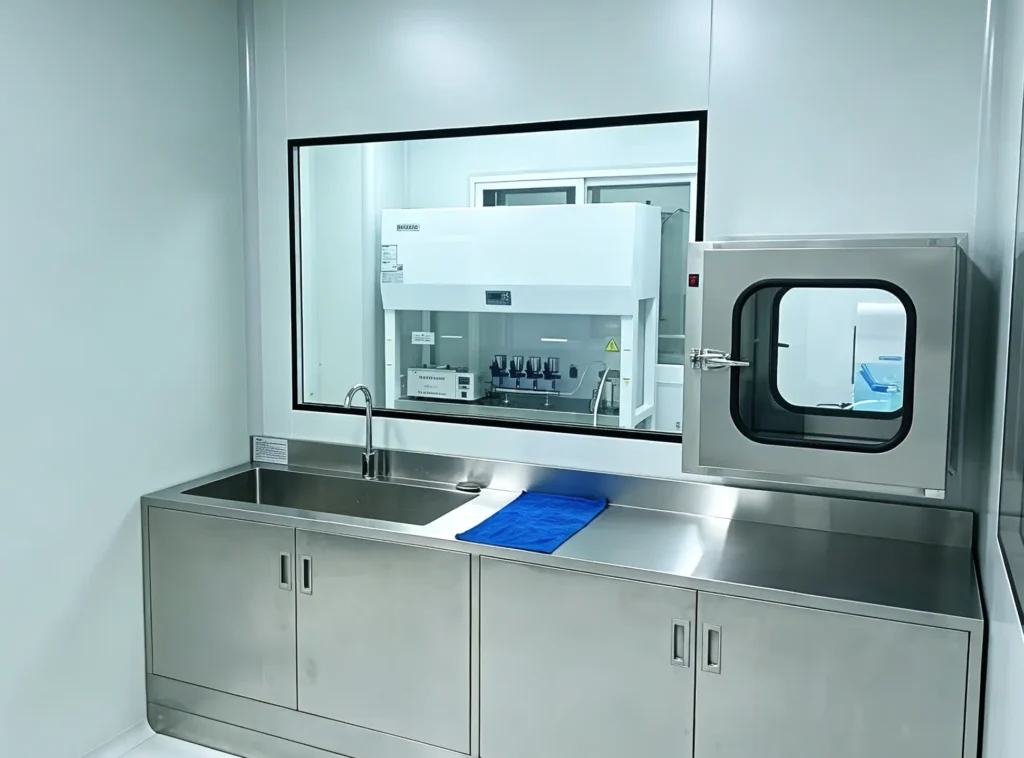
For cleanroom material selection and surface sanitation specifications, check standards from IEST.
II. Lab Workbenches Categorized by Layout Style
Layout affects space utilization and operational convenience; the main types are wall-mounted and central island-style (island).
1. Wall-Mounted Workbenches
Advantages: Space-saving; water and electrical lines can be connected directly to the back; easy to install; suitable for narrow, elongated, or peripheral areas; standard depth is 600–800 mm.
Applications: Allows for additional lighting (with wall-mounted fixtures) and storage (in overhead cabinets), facilitating easy access to reagents and water. Suitable for workstations next to fume hoods or in small laboratories.
2. Island-Style Workbenches
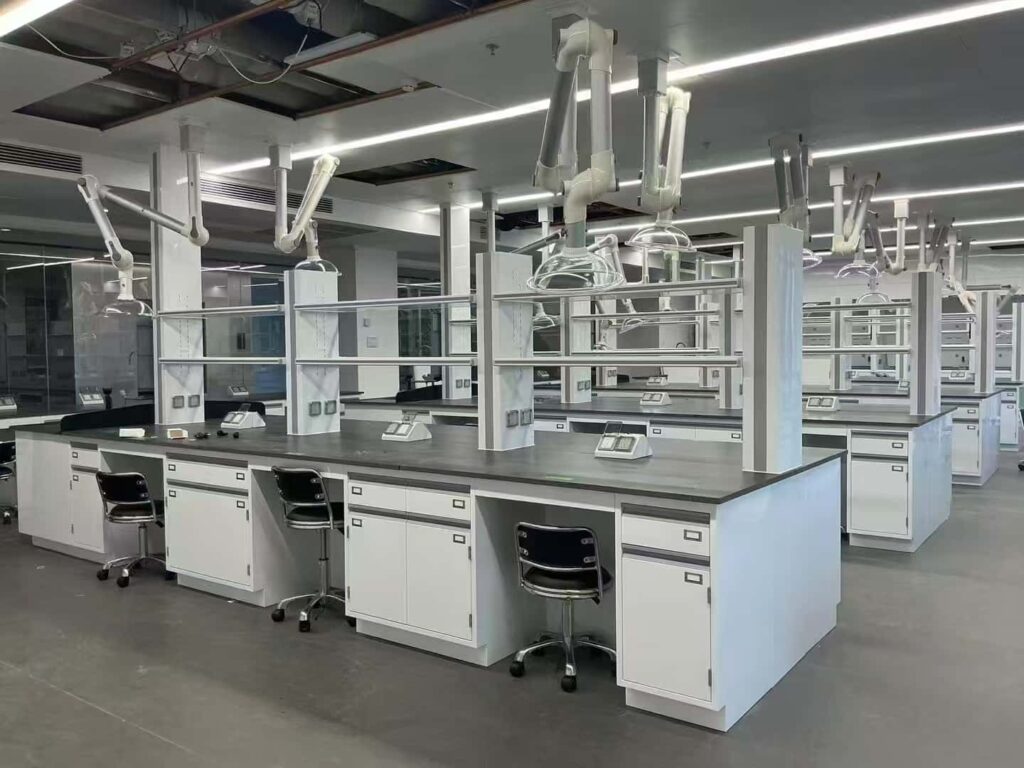
Advantages: Accessible from both sides, allowing 2–4 lab personnel to work simultaneously, thereby improving space efficiency. Standard depth: 800–1,500 mm.
Applications: Equipped with additional shelving, sink faucets, and power outlets to support the simultaneous operation of multiple instruments; ideal for collaborative team experiments.
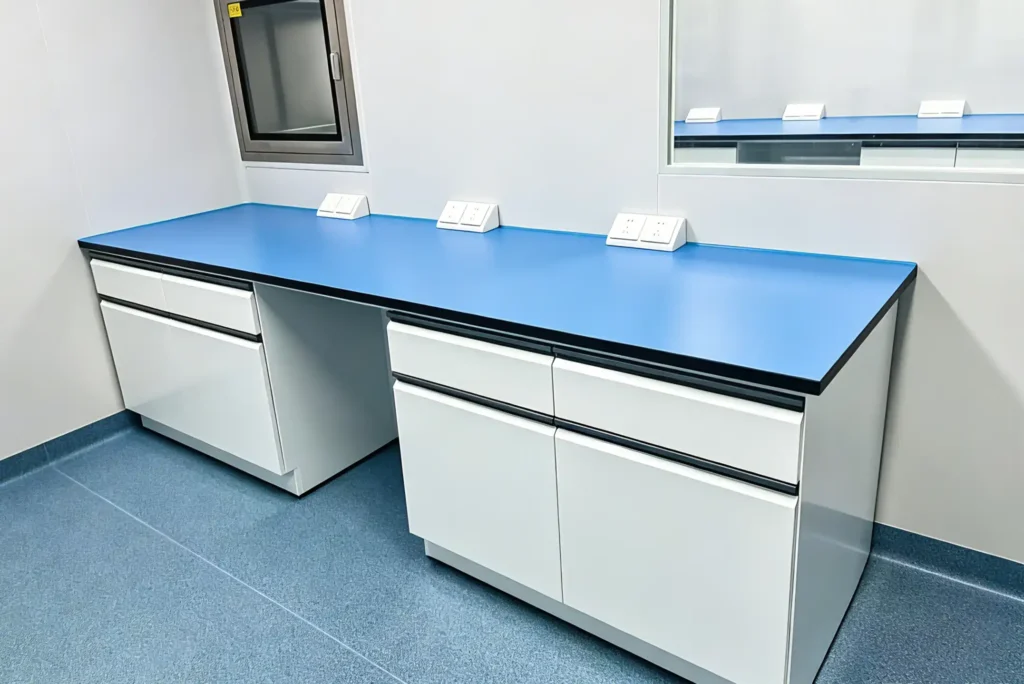
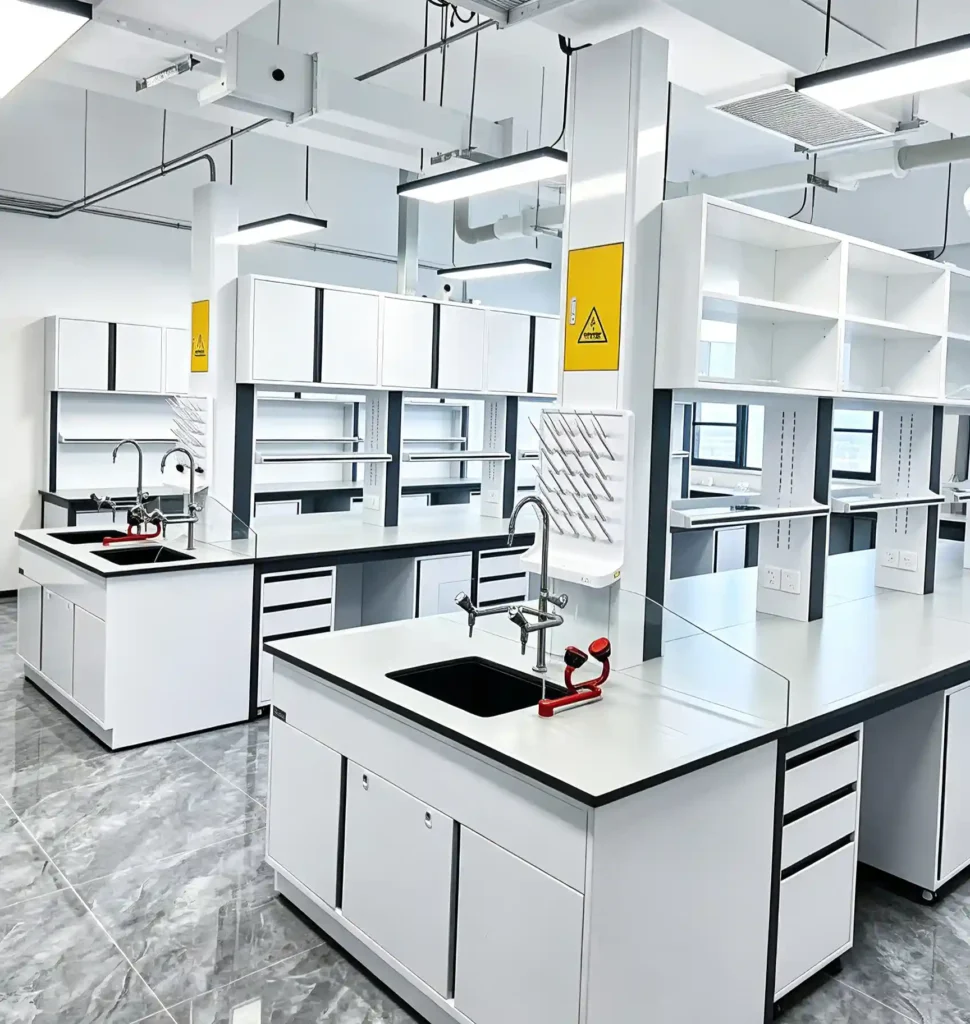
Laboratory Workbench Size Selection Guide: How do standard sizes fit your space? View details.
III. Lab Workbenches Categorized by Structural Design
The structure determines stability and flexibility. The cabinet mounting configuration directly affects storage capacity and legroom, and workbenches are divided into two main categories: support frame styles and cabinet-mounted styles.
1. C-Type Support Workbenches
Advantages: Ample legroom, high flexibility, easy floor cleaning, and relatively low cost.
Applications: Teaching laboratories and analytical workstations, facilitating seated operations and the movement of equipment. Suitable for medium- to light-duty equipment such as liquid-phase and gas-phase chromatography instruments.
Supports hanging drawers and movable cabinet units, facilitating disassembly and cleaning of the area under the workbench.
2. H-Type Supported Workbenches
Advantages: Extremely stable, high load-bearing capacity (up to 500 kg+), resistant to vibration and torsion; suitable for heavy equipment such as centrifuges and reactors.
Applications: Synthetic chemistry, high-pressure, or vibration-prone experimental areas.
Crossbeams can be used to install shelving, piping, and auxiliary supports.
C-Type vs. H-Type Lab Workbenches: How to Choose? An In-Depth Comparison.
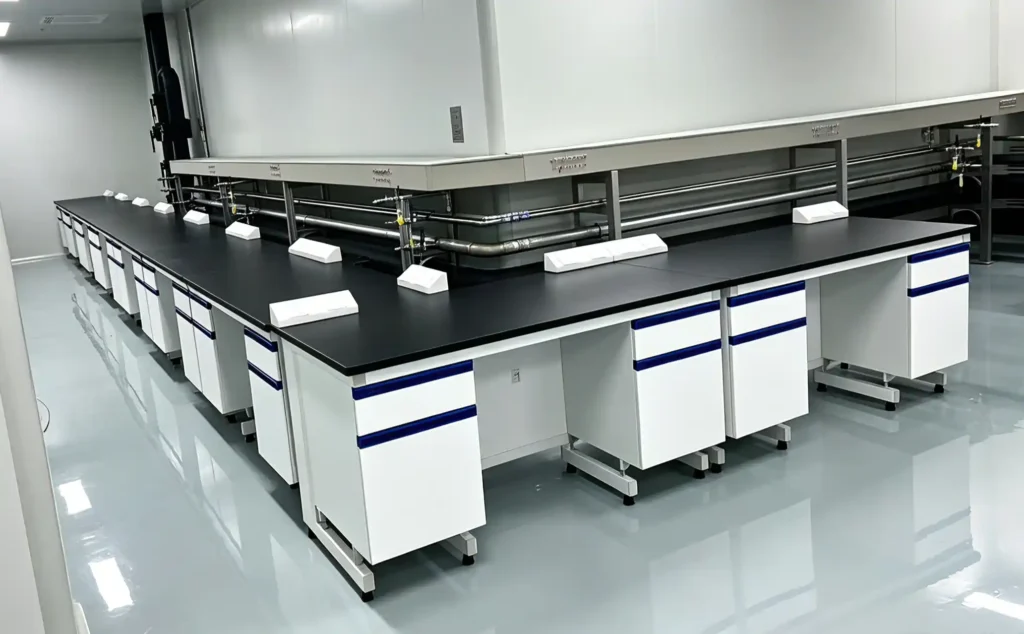
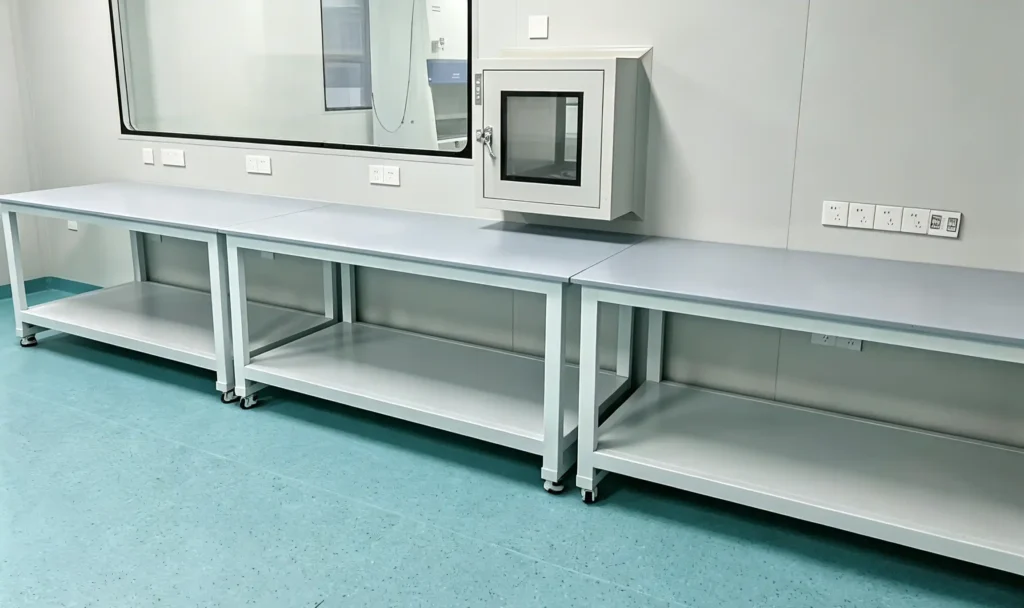
3. Workbench Cabinet Installation Structures and Styles
Floor-Standing with Workstation vs. Floor-Standing with Full Cabinet
The floor-standing with workstation design offers a sturdy structure, excellent load-bearing capacity, and flexible legroom; the floor-standing with full cabinet design provides a robust structure, ample storage space, and maximizes cabinet utilization.
Applications: Central laboratories with fixed layouts and quality control laboratories storing large quantities of samples. Details on workbenches with cabinets.
4. Suspended Cabinet Style
Advantages: Open space underneath for easy cleaning and moisture protection.
Applications: Laboratories with high cleanliness requirements, facilitating floor maintenance and modular adjustments.
5. Mobile Cabinet Style
Advantages: Optional casters allow for free movement and flexible reconfiguration.
Applications: Laboratory spaces requiring high flexibility and scalability.
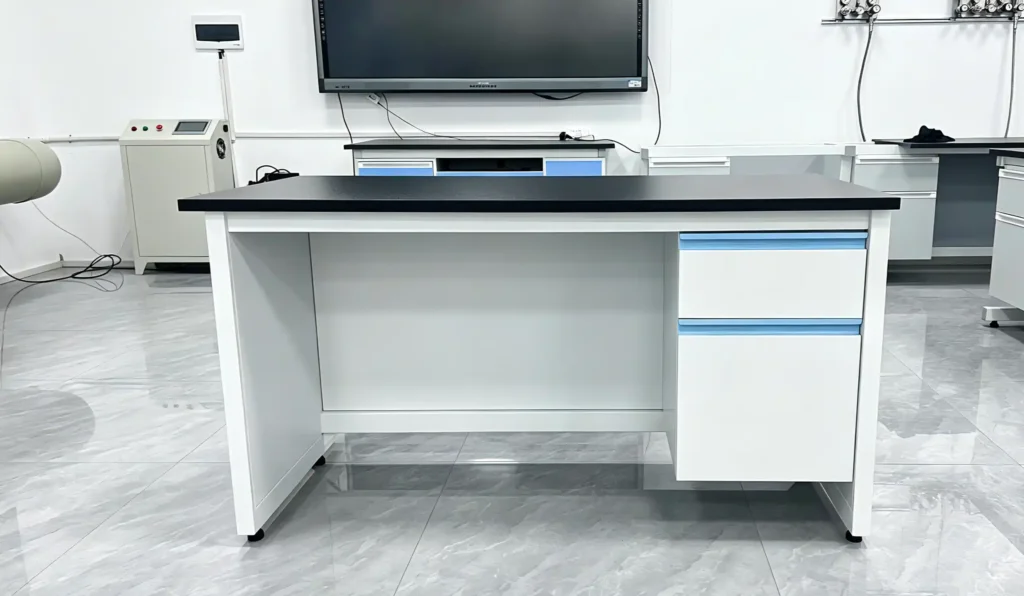
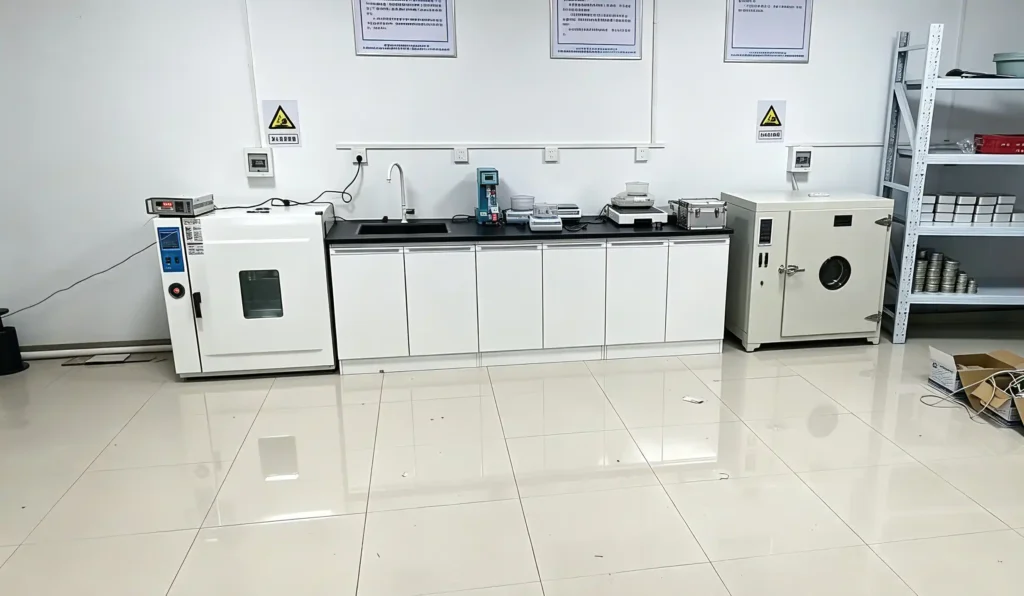
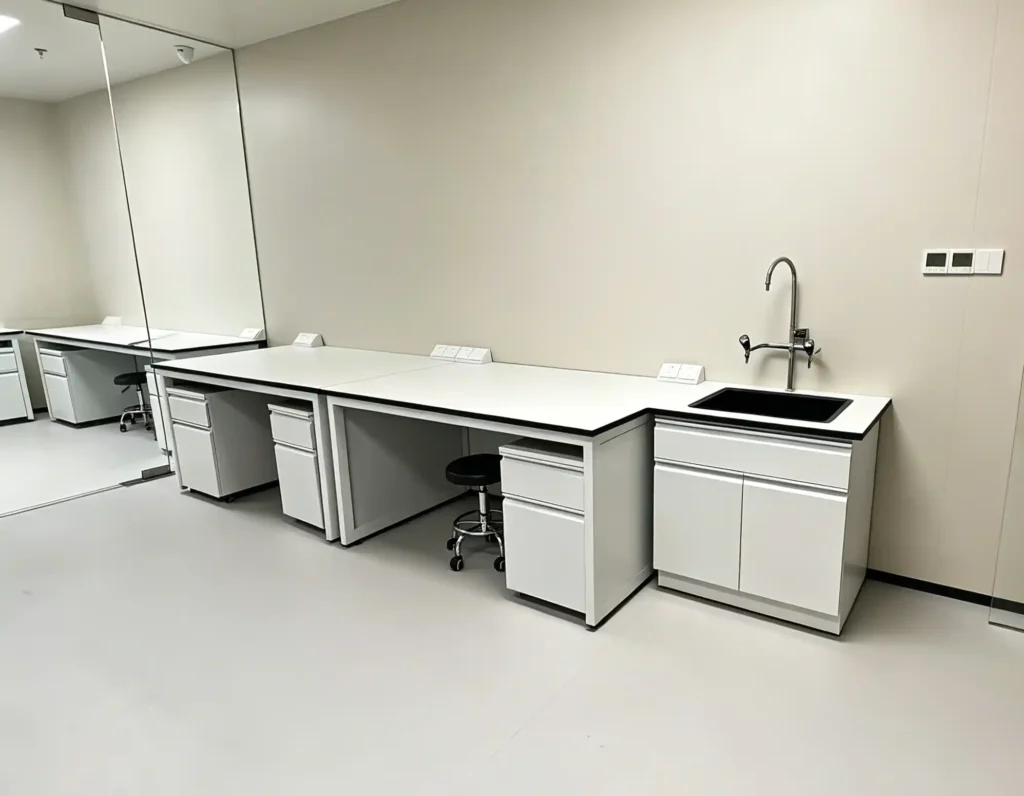
IV. Other Functional Styles: Custom Options to Enhance Practicality
Modern lab workbenches emphasize multifunctional, modular integration. The following styles can be combined:
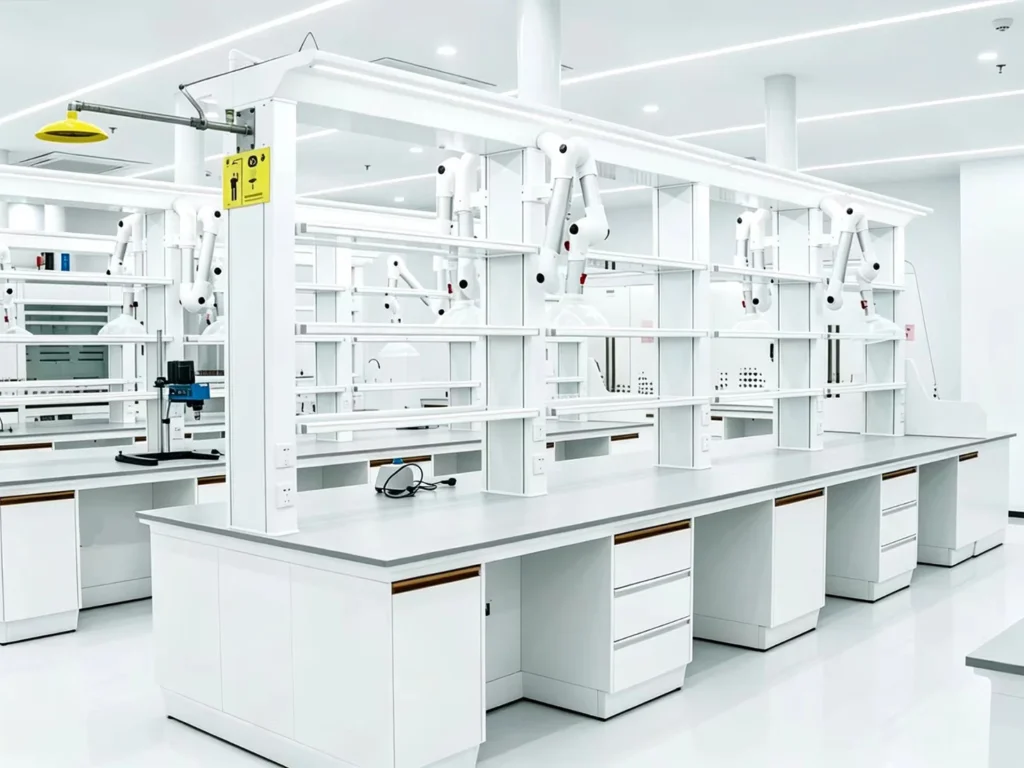
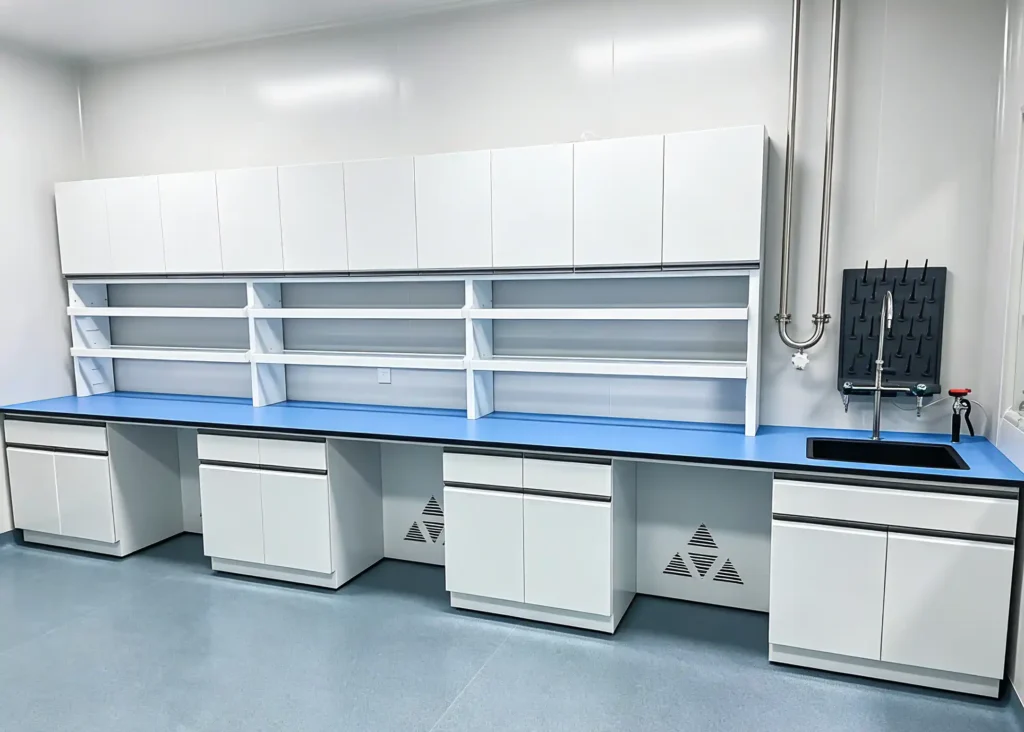
- Workbenches with wall cabinets: Additional storage space above the shelves makes it easy to access frequently used reagents and keeps the work surface clutter-free.
- Workbenches with lighting: LED light strips integrated into the shelves provide uniform, shadow-free illumination, enhancing operational precision and comfort.
- Workbenches with Shelves: Save 30% of countertop space and expand vertical storage capacity, ideal for reagent bottles and small equipment. Example of a laboratory workbench with shelves.
- Workbenches with Cabinets: Organize tools and documents to keep the countertop tidy.
- Workbenches with Drawers: Categorize pipettes, weighing pans, and various small consumables for convenient storage of tools. Details on Workbenches with Drawers.
- Heavy-Duty Reinforced Workbenches: Thickened frames and fully welded construction, with a load capacity of 500–1,000 kg. Introduction to the core features of heavy-duty lab workbenches.
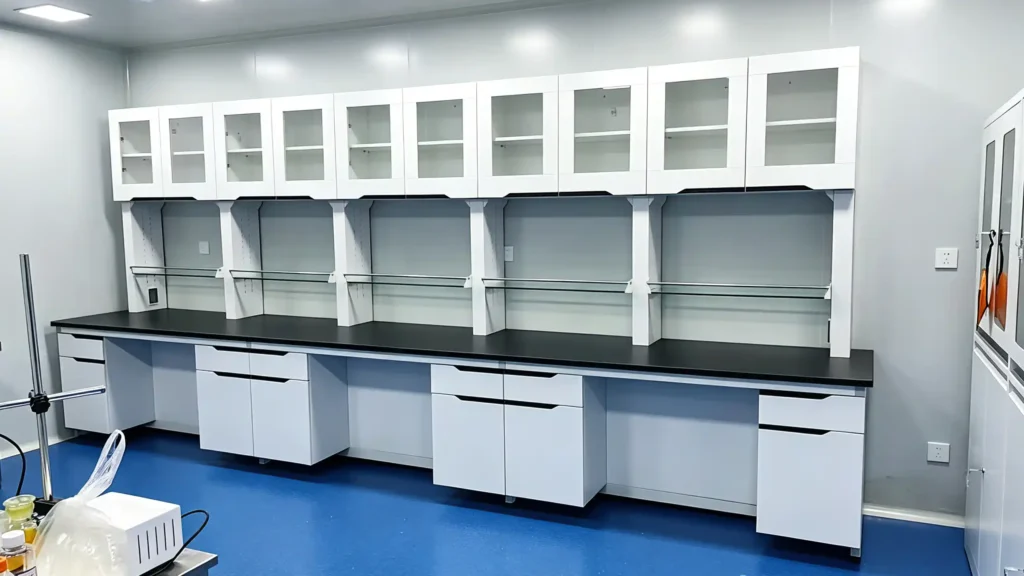
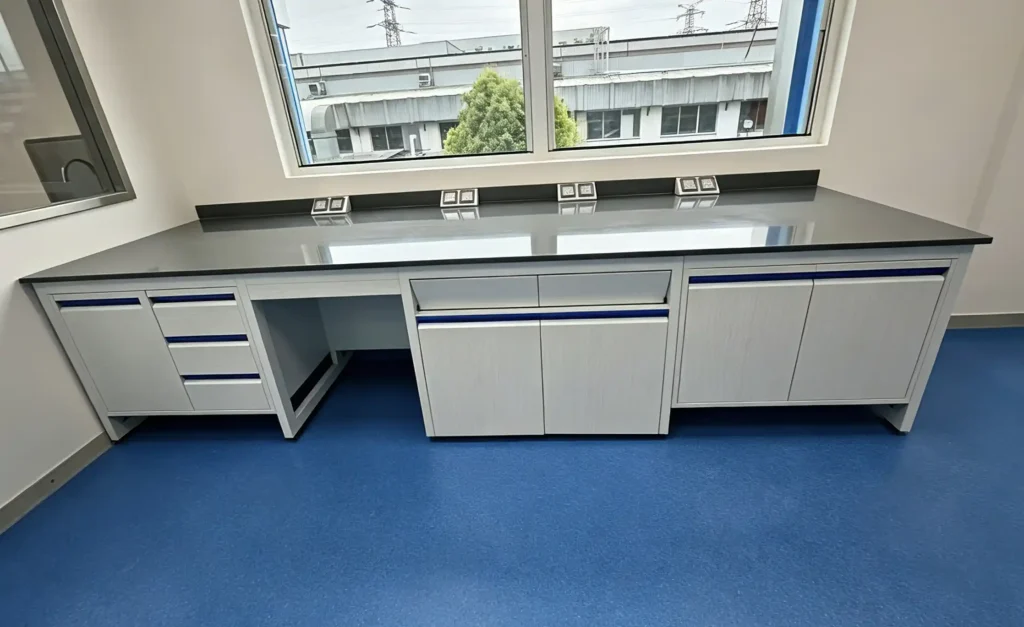
Laboratory Workbench Configuration Checklist: Ensure your selection covers all core features. Download or view.
Lab-WB: One-Stop Solution for Professional Lab Workbenches
Whether you need durable steel models, highly corrosion-resistant PP models, high-cleanliness stainless steel models, flexible C-type layouts, heavy-duty H-type structures, or custom designs featuring wall cabinets, lighting, shelves, and drawers, Lab-WB can professionally customize and manufacture them for you. We provide end-to-end services from design to installation, helping laboratories optimize space utilization, enhance safety, and improve work efficiency.
Choose Lab-WB to make your lab workbenches an efficient and reliable partner in your research. Contact us for a personalized solution!