In industrial laboratory and production environments, workbenches are often exposed to various harsh conditions such as metal cutting, oil contamination, acids, alkalis, and other corrosive substances. If the material of a laboratory workbench is not durable enough, it can easily suffer from wear, corrosion, and other issues, significantly shortening its service life.
Heavy-duty laboratory workbenches, through special surface treatments, full welding construction, and protective measures, can effectively resist erosion from these factors. They maintain excellent performance and appearance over time, extend the service life of the workbench, and reduce the enterprise’s equipment procurement costs.
This article introduces the core functions of heavy-duty workbenches. They not only meet the personalized needs of enterprises but also improve work efficiency and work quality.
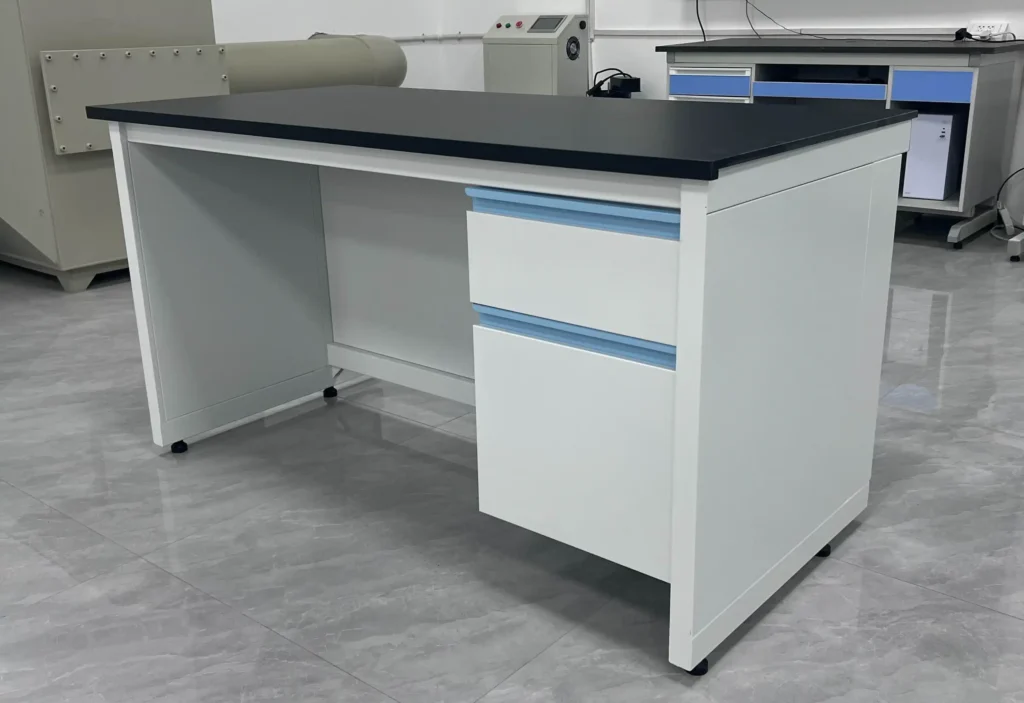
Ultra-High Load-Bearing Capacity
Heavy-duty workbenches are constructed using high-quality high-strength steel and advanced full-welding technology, delivering exceptional strength and stability. They can safely support loads of 1000kg, 2000kg, 3000kg, 5000kg, and more.
The monolithic welded structure effectively distributes the pressure of heavy objects, giving the workbench a load-bearing capacity far superior to that of ordinary workbenches.
Whether handling large molds or heavy mechanical equipment, heavy-duty workbenches can manage them with ease, providing reliable support for your work.
Impact-Resistant and Wear-Resistant Tabletop Materials
The tabletop is a key factor determining the service life of a heavy-duty laboratory workbench. A variety of tabletop options are available to meet different application requirements.
- Polymer Composite Tabletop
- The surface features a 2mm wear-resistant rubber mat over a polymer fiberboard, with high-strength plastic edging on all four sides.
- Steel Plate Tabletop
- The surface is covered with a steel plate, which undergoes precision grinding and polishing, offering excellent impact resistance.
- Beech Wood Tabletop
- Made of high-density beech wood, it provides good impact resistance and high load-bearing capacity, making it ideal for mechanical processing operations.
- Stainless Steel Tabletop
- A 1mm thick stainless steel sheet is bonded over a high-density fiber composite board.
- Fireproof Board Tabletop
- The surface is made of fireproof board material, which is wear-resistant and fire-retardant. The substrate uses high-density fiber, with high-strength plastic edging around the perimeter.
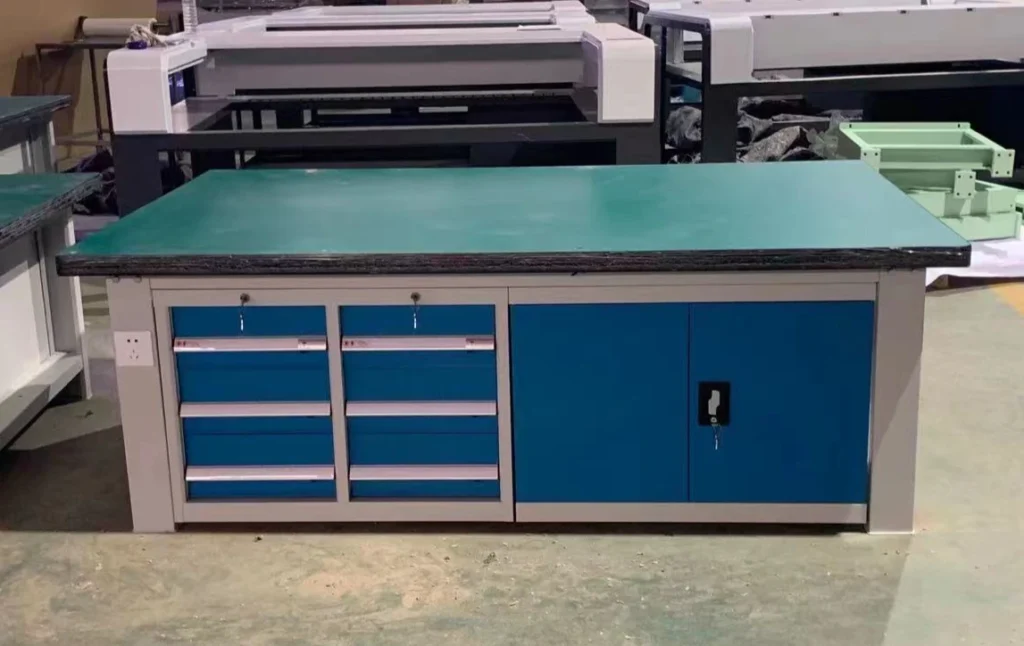
Ergonomic Design
Heavy-duty workbenches are designed with full consideration of ergonomic principles. Standard heights of 800mm and 900mm are well-suited to human body proportions and help maximize work efficiency. The operating depth of 750mm allows workers to maintain a comfortable posture during operation, effectively reducing fatigue.
Lab-WB can also be custom-designed according to customer requirements, creating workbenches with special purposes and specifications. This customization helps reduce worker fatigue while significantly improving work efficiency.
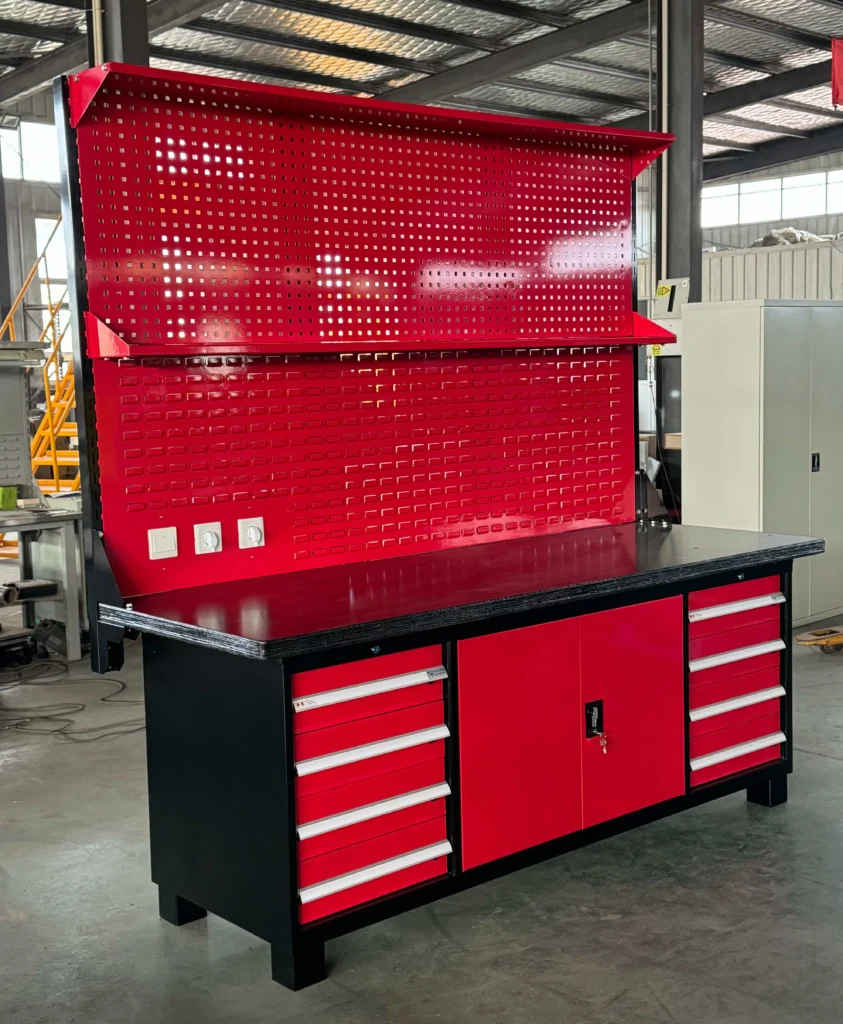
User-Friendly Storage and Expansion Features
A heavy-duty laboratory workbench must be not only strong but also highly practical. Common functional accessories include:
- Storage cabinets and drawers underneath
- Side hanging panels and reagent racks
- Power sockets and cable tray designs
- Adjustable leveling feet to adapt to uneven floors
A well-planned layout makes it convenient for laboratory personnel to store and access tools, thereby improving work efficiency and making operations smoother.
Excellent Stability
To ensure no shaking or displacement occurs during work, heavy-duty workbenches adopt a robust support structure and anti-slip design. The four casters are made of high-quality rubber material, providing excellent anti-slip performance and allowing the workbench to stand stably on various types of flooring.
In addition, the overall structure has been optimized to effectively reduce vibration and noise, creating a quiet and stable working environment.
Easy-to-Clean and Low-Maintenance Design
Heavy-duty laboratory workbenches are designed for easy daily cleaning. The tabletops are smooth and seamless, making them resistant to dirt accumulation. The steel surfaces are smooth and can be wiped clean effortlessly.
This low-maintenance design saves both time and cost, making it ideal for long-term, high-frequency use in industrial laboratories.
Superior Chemical Corrosion Resistance
Many laboratories frequently handle acids, alkalis, organic, and inorganic solvents. Heavy-duty laboratory workbenches offer excellent corrosion resistance. The surface undergoes epoxy resin powder electrostatic anti-corrosion treatment.
This effectively prevents rust, corrosion, and powdering caused by reagent spills, ensuring long-term safe use of the workbench.
Compliance with Safety Standards and Certifications
Heavy-duty laboratory workbenches that meet safety standards and certifications must fulfill core requirements in structure, load-bearing capacity, safety, materials, and installation.
- SEFA 8M-2020: The global gold standard for heavy-duty laboratory workbenches and cabinets, specifically designed for high-load and highly corrosive environments.
- EN 14056-1:2025: Specifies structural requirements, dimensions, service interfaces (water, electricity, gas), and safety design for heavy-duty benches, suitable for scientific research and industrial heavy-duty laboratories.
- ISO 20985:2018: General testing and performance standards for laboratory furniture, including static load, dynamic load, stability, and durability tests for heavy-duty workbenches.
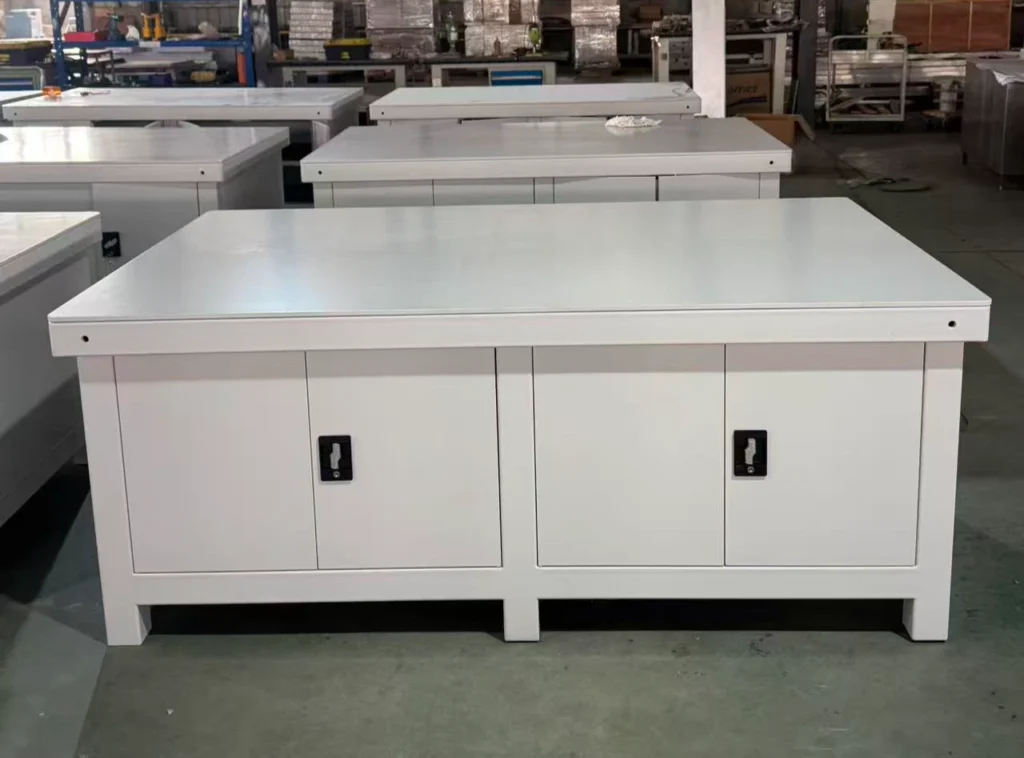
When selecting a heavy-duty laboratory workbench, it is essential to comprehensively consider factors such as load-bearing capacity, tabletop material, dimensions, and functionality.
With its ultra-high load-bearing capacity, premium tabletop materials, user-friendly ergonomic design, and excellent stability, this heavy-duty workbench has become the top choice for numerous users. It provides reliable support for industries such as mold manufacturing and mechanical processing, while effectively improving work efficiency and product quality.