The global laboratory furniture market is a sector valued at approximately $2 billion, characterized by steady growth but a highly fragmented market structure. The market size was approximately $2.038 billion in 2025 and is projected to grow to $2.532 billion by 2032, representing a compound annual growth rate (CAGR) of approximately 3.2%.
To help global procurement clients make precise selections and avoid common pitfalls, this article compiles the top 10 authoritative global laboratory furniture brands for 2027 and provides a systematic overview of the entire international procurement process for laboratory furniture.
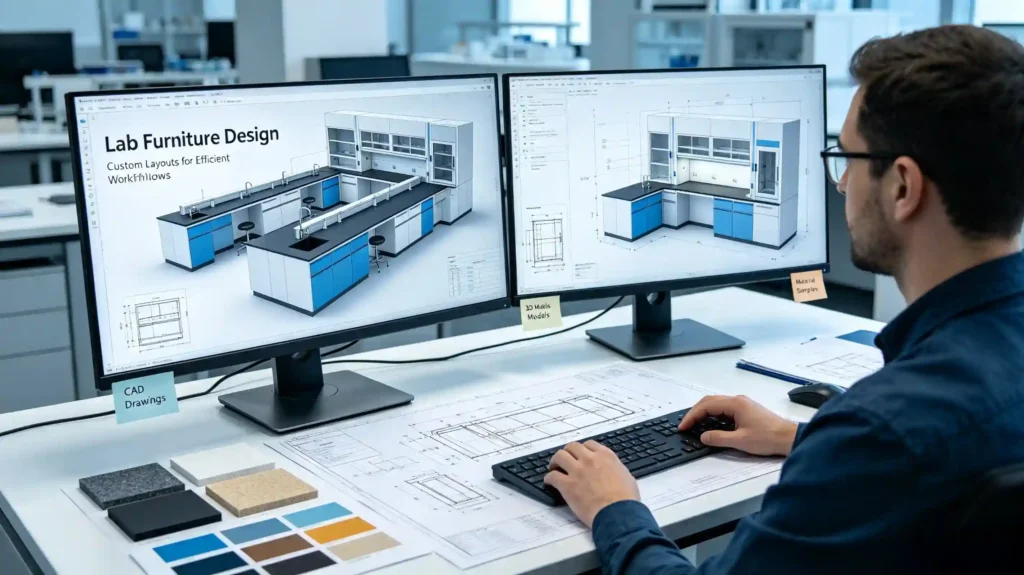
- I. Overview of the Top 10 Global Laboratory Furniture Manufacturers in 2027
- II. Comparison Table of the Top 10 International Laboratory Furniture Manufacturers by Scale
- III. International Procurement of Laboratory Furniture: A Comprehensive Guide to Preparing RFPs
- IV. How to Screen High-Quality Laboratory Furniture Manufacturers
- V. Guide to International Procurement of Laboratory Furniture
- VI. Laboratory Furniture Selection Guidelines for Different Scenarios
- VII. Common Misconceptions in International Laboratory Furniture Procurement
- IX. Summary
- X. Frequently Asked Questions (FAQ)
- XI. Reference Sources
I. Overview of the Top 10 Global Laboratory Furniture Manufacturers in 2027
1. Waldner (Germany)
A global benchmark brand for high-end laboratory systems, specializing in comprehensive solutions for modular, smart laboratories. Its flagship products include smart ventilation systems, modular lab benches, and integrated storage systems, which are highly precise, stable, and safe. The company primarily serves top pharmaceutical companies, research institutions, and high-end R&D laboratories in Europe and the United States.
2. Thermo Fisher (United States)
A global leader across the entire laboratory industry chain, covering a full range of products including instruments, furniture, and consumables. Its furniture features a high degree of standardization and adaptability to all scenarios. Its core advantage lies in the integrated supply of instruments and furniture, supported by a comprehensive global distribution network, making it well-suited for large-scale multinational turnkey projects.
3. Kewaunee Scientific (U.S.)
A long-established North American manufacturer of professional laboratory furniture that strictly adheres to U.S. industry standards such as SEFA and ANSI. The company specializes in corrosion-resistant laboratory benches, custom cabinets, and industrial-grade fume hoods, featuring robust craftsmanship and strong compliance. Its products are widely used in North American universities and third-party testing laboratories.
4. Köttermann (Germany)
A representative of German modular precision engineering, specializing in comprehensive laboratory space planning and standardized solutions. Its products feature minimalist, adaptable designs with strong corrosion resistance and durability, making them ideal for long-term professional experimental settings such as research institutes and chemical research centers; they enjoy extremely high recognition in the European market.
5. Lab-WB (China)
A leading brand in high-end laboratory furniture in the Asia-Pacific region, specializing in modular furniture and cleanroom laboratory solutions. Its flagship products include high-end laboratory workbenches, exhaust systems, and modular integrated facilities, with a focus on the biopharmaceutical, vaccine R&D, and microbiological testing sectors; the company has extensive experience in implementing high-end projects worldwide.
6. Labconco (U.S.)
A global leader in ventilation equipment, specializing in high-performance fume hoods and protective exhaust systems. Featuring stable airflow and excellent leak-proof performance, these products have passed safety certifications in multiple countries and are suitable for laboratories with high safety requirements, such as those handling high-risk chemicals or toxic gas testing.
7. Mott Manufacturing (Canada)
A large-scale, standardized laboratory furniture manufacturer in North America that balances quality with value. Its flagship products include standardized laboratory furniture and custom cabinets, suitable for general applications such as university teaching and routine chemical testing, and well-suited to overseas small-to-medium batch procurement needs.
8. Asecos (Germany)
A global leader in the hazardous chemical storage sector, specializing in explosion-proof storage cabinets, cylinder cabinets, and corrosion-resistant storage systems. Its entire product line complies with EU safety standards and features outstanding flame-retardant, leak-proof, and explosion-proof properties, making it a core safety equipment brand for hazardous chemical and chemical laboratories.
9. Terra Universal (U.S.)
Specializes in high-end laboratory equipment for specialized environments, focusing on dust-free cleanroom and temperature/humidity-controlled furniture. Suitable for high-precision experimental scenarios such as semiconductor manufacturing, precision instrumentation, and new materials R&D, with industry-leading environmental control accuracy.
10. NuAire (U.S.)
Deeply rooted in the field of biological laboratory equipment, specializing in biosafety workbenches, sterile purification systems, and ventilation furniture. Products offer high stability and value for money, focusing on the construction of small- and medium-sized biological laboratories and medical testing laboratories.
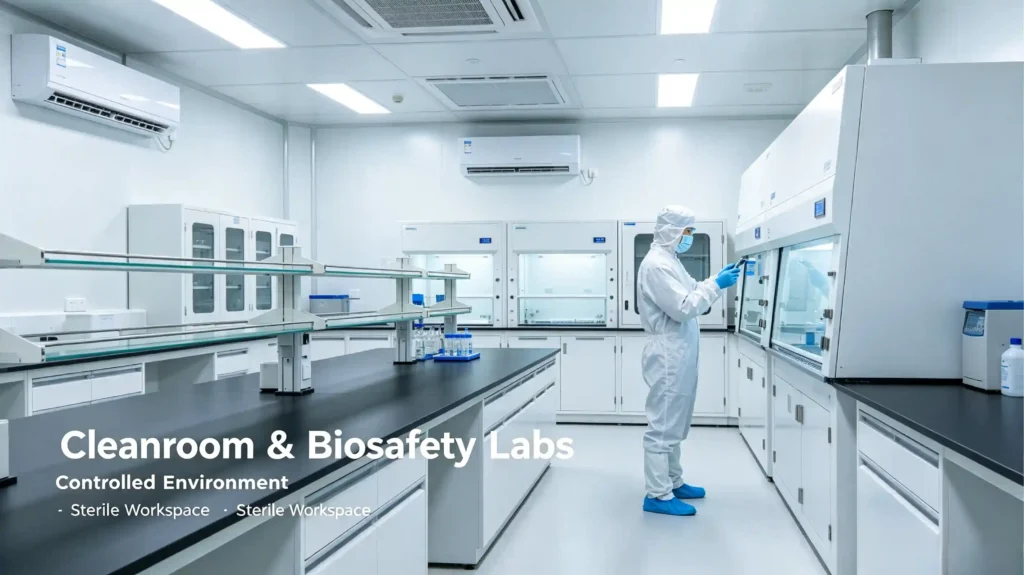
II. Comparison Table of the Top 10 International Laboratory Furniture Manufacturers by Scale
| Company | Year Founded | Employees | Factory Area | Headquarters Location | Custom Manufacturing | Website |
| Waldner | 1908 | Approx. 1,800 | 700,000 square feet | Germany | Yes | www.waldner.de |
| Thermo Fisher | N/A | Hundreds of thousands | Multiple global factories | U.S. | Partially | www.thermofisher.com |
| Kewaunee | 1906 | N/A | Multiple U.S. factories + India factory | Statesville, North Carolina, U.S. | Yes | www.kewaunee.com |
| Köttermann | 1946 | Approx. 140 | N/A | Hänigsen, Germany | Yes | www.koettermann.com |
| Lab-WB | 1997 | Approx. 170 | 210,000 square feet | Heze, China | Yes | labworkbenchs.com |
| Labconco | 1925 | Approx. 200 | 2 locations in the U.S. | Kansas City, Missouri, U.S. | Partially | www.labconco.com |
| Mott | 1934 | N/A | Multiple facilities in Canada and the U.S. | Brantford, Canada | Yes | www.mott.ca |
| Asecos | 1994 | Approx. 400 | 430,000 square feet | Gründau, Germany | Partially | www.asecos.com |
| Terra Universal | 1976 | Approx. 150 | N/A | Fullerton, California, U.S. | Partially | www.terrauniversal.com |
| NuAire | 1971 | Approx. 300 | 300,000 square feet | Minnesota, U.S. | Yes | www.nuaire.com |
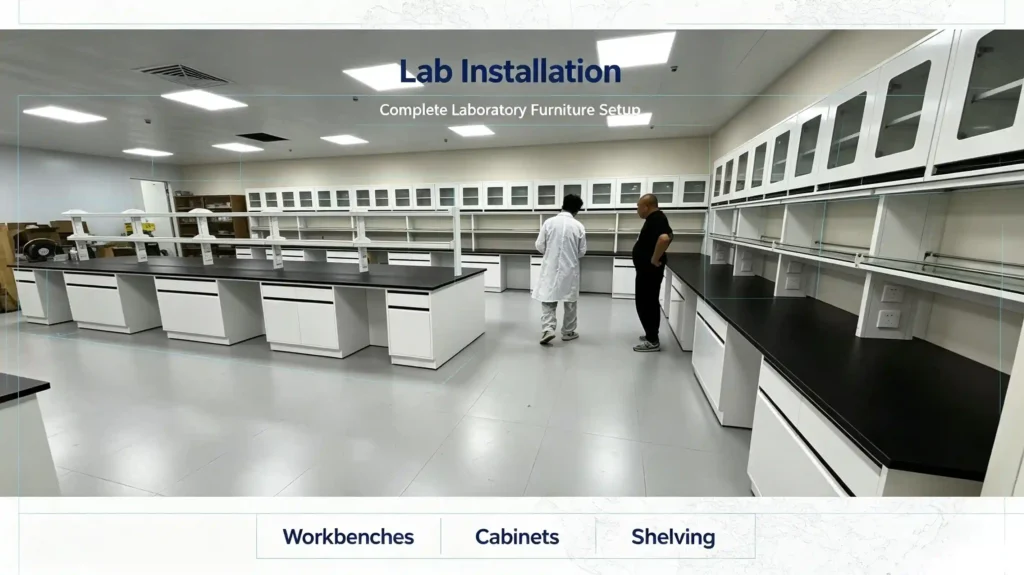
III. International Procurement of Laboratory Furniture: A Comprehensive Guide to Preparing RFPs
The biggest misconception in cross-border procurement is vague requirements and blind requests for quotes, which lead to significant deviations in pricing, non-compliant products, and project delays or rework. In the early stages of international procurement, it is essential to systematically organize the following core requirements to create a standardized request for proposal (RFP):
Content should include: performance specifications (chemical and load ratings), surface treatments (phenolic resin, epoxy resin, stainless steel), utility piping (gas, vacuum, power), fume hood performance (face velocity, certifications), scope of installation, warranty terms, and delivery lead times. For critical projects, it is essential to insist that laboratory furniture manufacturers conduct quality assurance testing and ensure material traceability.
1. Define the laboratory environment and classification
Precisely define the laboratory type—including teaching, GMP pharmaceutical, chemical corrosion, biological cleanroom, and precision instrumentation—and match them with the corresponding standards for corrosion resistance, cleanliness, explosion protection, and ventilation.
2. Compile a comprehensive product procurement list
Compile a list of all required furniture categories, including central lab benches, side benches, fume hoods, reagent cabinets, gas cylinder cabinets, balance benches, instrument benches, and lab chairs. Determine preferred materials in advance (epoxy resin, phenolic resin, 304 stainless steel, PP, ceramic countertops).
3. Specify operating conditions and performance parameters
Clearly define core operational requirements such as daily experimental media, equipment load capacity, ventilation airflow, anti-static measures, explosion protection, and cleanliness to ensure product performance aligns with on-site usage scenarios.
4. Identify target country compliance standards
Research the laboratory industry access standards of the project’s host country in advance to confirm whether certifications such as CE, ISO, or SEFA are required, and clarify the documentation requirements for customs clearance, including test reports, qualification documents, and certificates of origin.
5. Determine cross-border delivery and timeline requirements
Specify the delivery address, seaport of shipment, trade terms (EXW/FOB/CIF/DAP), production and delivery lead time, and whether CAD layout drawings, remote overseas installation guidance, or warranty service periods are required.
6. Define Acceptance and After-Sales Standards
Establish an overall procurement budget range; finalize product acceptance criteria, material sampling standards, and after-sales repair responsibilities in advance; and incorporate these into the procurement contract to avoid cross-border disputes.
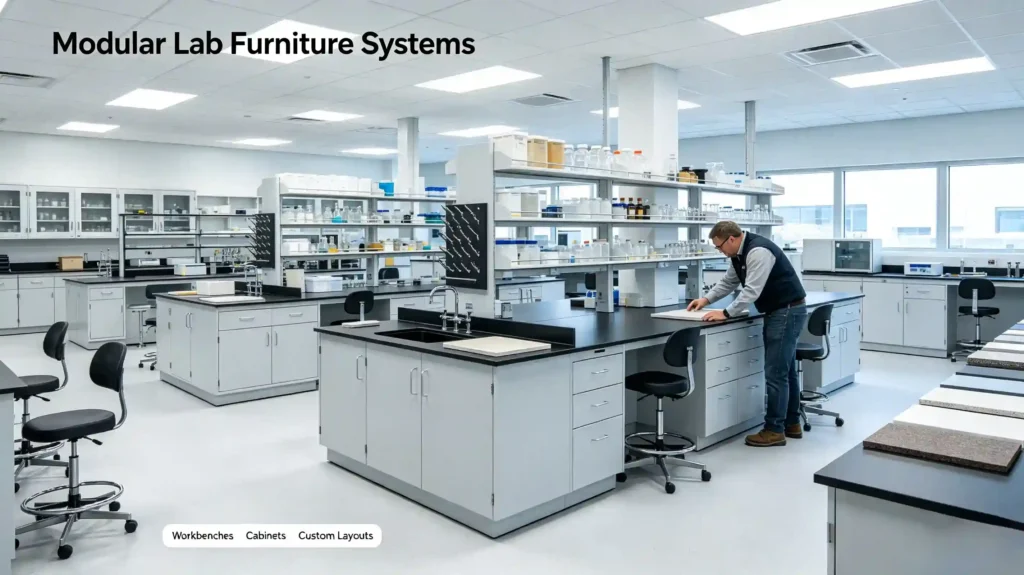
IV. How to Screen High-Quality Laboratory Furniture Manufacturers
Faced with numerous laboratory furniture manufacturers worldwide, buyers can screen for reliable manufacturers and eliminate middlemen and substandard factories by evaluating seven core criteria:
1. Verify Corporate Qualifications and International Certifications
Prioritize verifying authoritative certifications such as the factory’s ISO quality management system certification, product CE safety certification, SEFA (U.S. laboratory standards) certification, and RoHS environmental certification. Reject laboratory furniture manufacturers without formal test reports or those with falsified credentials to ensure products comply with overseas market access regulations.
2. Verify Authentic Overseas Project Cases
Focus on the laboratory furniture manufacturer’s completed projects in the same country and for the same type of laboratory. Prioritize factories with experience in overseas projects in Europe, the U.S., the Middle East, and Southeast Asia, as they are familiar with local standards and offer better adaptability.
3. Distinguish Between Direct Manufacturers and Trading Intermediaries
Direct laboratory furniture manufacturers possess the advantages of in-house production, customization capabilities, controllable quality assurance, and stable delivery schedules; trading intermediaries lack production capacity, making customization difficult, after-sales service slow, and prices relatively high. For large-scale overseas projects, prioritize direct procurement from manufacturers.
4. Evaluate Customization and Manufacturing Capabilities
High-quality laboratory furniture manufacturers can create personalized modifications based on laboratory layouts, equipment dimensions, and local standards, supporting customization of countertop materials, cabinet colors, and structural dimensions—rather than merely selling standardized off-the-shelf products.
5. Evaluate Cross-Border Trade Support Capabilities
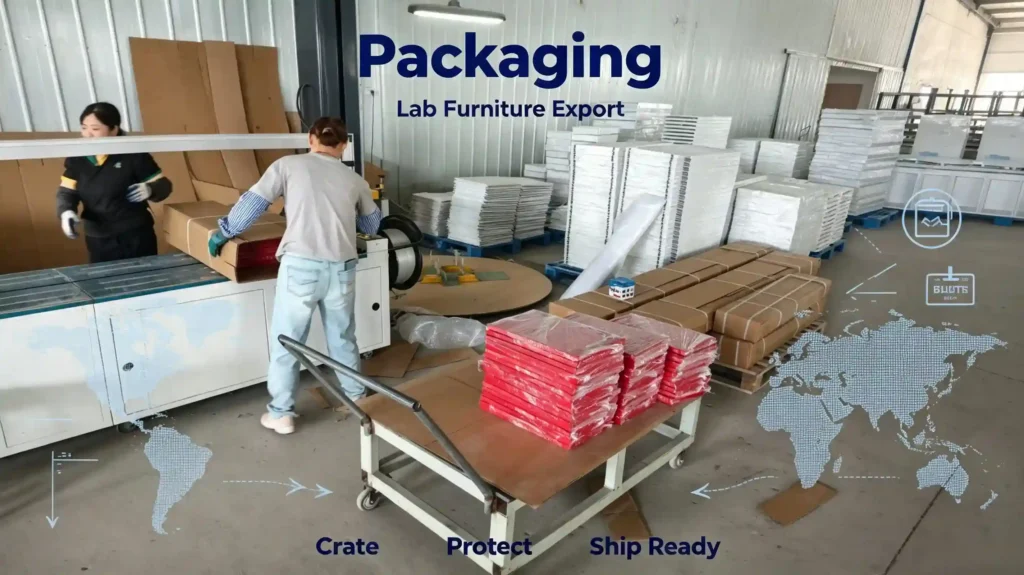
Assess whether laboratory furniture manufacturers are familiar with international trade terms and can provide a complete set of customs clearance documents, professional shock-resistant packaging for ocean freight, container loading calculations, and transportation solutions for oversized cargo to avoid issues such as damage during sea transport and customs clearance delays.
6. Verify Quote Transparency
Reputable laboratory furniture manufacturers provide itemized quotes that clearly list product costs, packaging fees, shipping costs, and documentation fees—with no hidden charges or low-price gimmicks—and ensure contract terms are clear and fair.
7. Confirm Overseas After-Sales Support Capabilities
High-quality export laboratory furniture manufacturers offer lifetime technical consultation, remote installation guidance, warranty repairs, and replacement parts, addressing the common pain point of after-sales service challenges in cross-border procurement.
V. Guide to International Procurement of Laboratory Furniture
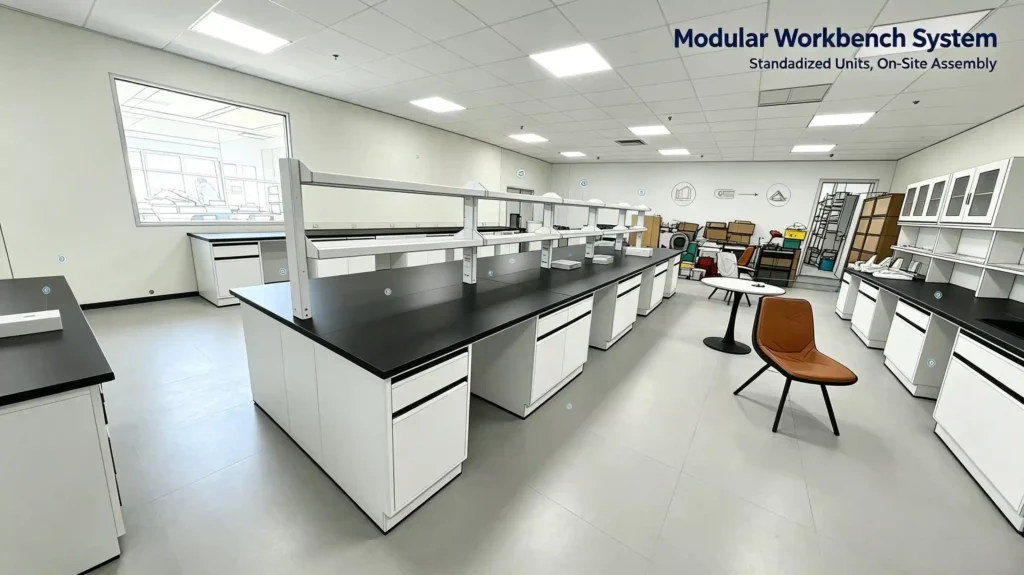
1. Standardize RFQs
Create a standardized English RFQ template to ensure all manufacturers receive the same requirements. This enables fair, side-by-side price comparisons and prevents quotes from becoming unreliable due to discrepancies in requirements.
2. Reject Lowest Price Only Procurement
Low-cost products commonly suffer from issues such as flimsy panels, inferior countertops, substandard treatment, and susceptibility to warping and cracking. International procurement requires calculating the full lifecycle cost, prioritizing quality and durability.
3. Pre-screen Samples and Qualifications
For large-scale overseas projects, require manufacturers to provide material samples and original test reports for verification to mitigate quality risks in advance.
4. Refine trade and contract terms
Clearly define payment methods, delivery schedules, compensation, replacement for damaged goods, warranty start and end dates, and the division of customs clearance responsibilities to minimize cross-border trade risks as much as possible.
5. Accurately calculate container loading capacity
Calculate the loading capacity of 40GP and 20GP containers in advance, optimize packing plans, and reduce international logistics costs.
6. Establish a dual-manufacturer reserve mechanism
For core projects, designate one primary manufacturer and one backup manufacturer to mitigate issues such as insufficient production capacity, logistics delays, and supply chain fluctuations.
7. Conduct localized compliance reviews in advance
Align with local engineering standards early on to ensure product dimensions, safety standards, and electrical compatibility comply with local regulations, thereby preventing clearance issues upon arrival at the port.
VI. Laboratory Furniture Selection Guidelines for Different Scenarios
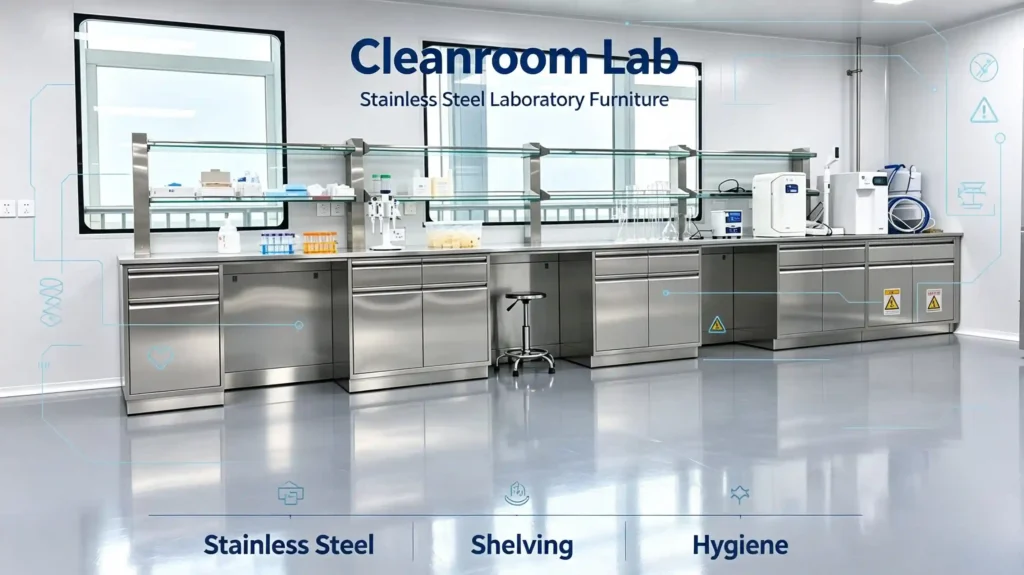
1. Pharmaceutical/Biological Cleanrooms
Comply with international GMP cleanroom standards by using low-VOC, recyclable, eco-friendly epoxy resin countertops and sealed cabinetry that are dust-free and easy to disinfect, balancing cleanliness standards with green sustainability.
2. Highly Corrosive Chemical Laboratories
Select highly corrosion-resistant, recyclable, eco-friendly PP furniture with epoxy resin countertops that resist aging and do not leach harmful substances, making them suitable for corrosive environments while meeting international green material selection requirements.
3. University Teaching Laboratories
Utilize standardized laboratory benches with eco-friendly, low-formaldehyde, recyclable Weishengya HPL countertops that offer stable performance, high cost-effectiveness, and eco-friendly durability, aligning with sustainable laboratory construction standards for overseas universities.
4. Hazardous Chemical Testing Laboratories
In accordance with dual EU safety and environmental standards, flame-retardant, explosion-proof, low-emission, and recyclable eco-friendly storage cabinets are selected, balancing safety protection with sustainable material selection guidelines.
5. Precision Instrument Laboratories
Lab workbenches and balance tables made of high-load-bearing, shock-resistant, low-VOC eco-friendly coatings, and recyclable steel are selected. These produce no pollutant emissions, ensuring experimental accuracy and meeting green laboratory construction requirements.

VII. Common Misconceptions in International Laboratory Furniture Procurement
1. Misconception: Modular = Flexible and Easily Modifiable at Any Time
The expandability of modular furniture depends on a comprehensive accessory system and long-term after-sales support. If a laboratory furniture manufacturer lacks sufficient accessory inventory or has gaps in after-sales service, subsequent upgrades and modifications will be impossible, rendering the flexibility of modular furniture completely ineffective.
2. Misconception: Relying Solely on Face Velocity to Determine Fume Hood Safety
A single face velocity value cannot define comprehensive protective performance. Internationally, the mainstream standards—ASHRAE 110 tracer gas testing and EN 14175 containment levels—serve as core evaluation criteria, comprehensively verifying actual operational safety and protection capabilities while avoiding assessment biases caused by relying on a single parameter.
3. Misconception: Neglecting Coordination Between On-Site Installation and Commissioning
Laboratory furniture is part of an integrated engineering system. Professional installation and commissioning—including exhaust duct connections, leveling, and the integration of water, power, and gas systems—directly determine the final performance and project quality.
4. Misconception: Focusing solely on warranty terms on paper
When purchasing, verify the warranty scope, response times, coverage for wear-and-tear parts, and long-term spare parts supply. A long-term warranty without ongoing spare parts support has very little practical value.
VIII. Lab-WB Meets the Core Requirements for International Buyers
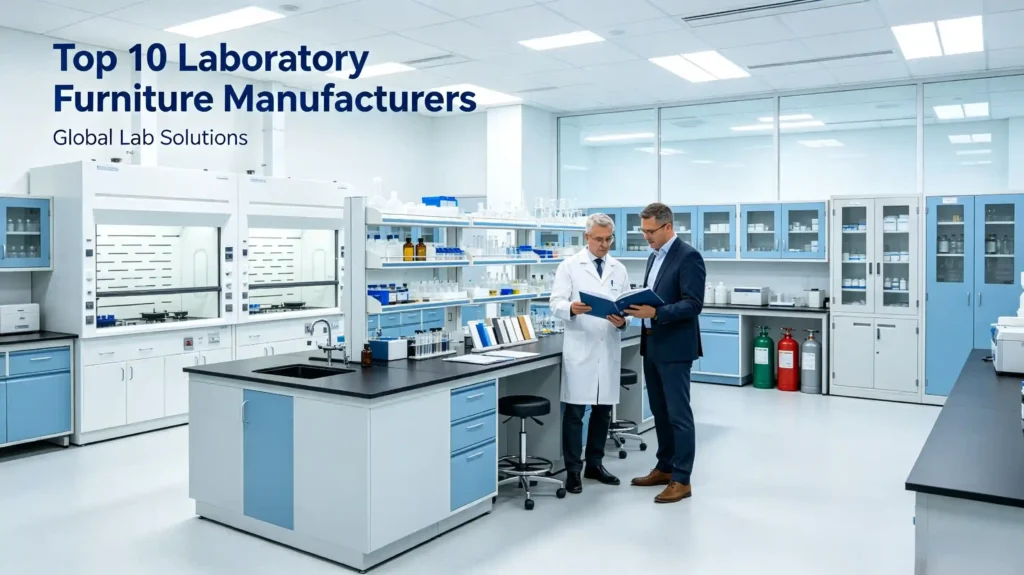
Overseas buyers, general contractors, and trading agents prioritize source manufacturers with comprehensive global supply capabilities, compliance certifications, and localized services. Lab-WB specializes in the export of laboratory furniture and possesses end-to-end capabilities spanning production, delivery, and overseas services.
1. Specialized Overseas Online Brand
Lab-WB operates an independent official website that showcases the factory’s capabilities, production processes, international certifications, and overseas case studies in real time, quickly building trust with international buyers.
2. Complete Set of Standardized Foreign Trade Documentation
Equipped with comprehensive English brochures, technical specifications, test reports, international certifications, and project case studies, fully compatible with overseas engineering projects and bidding processes.
3. Cross-border Trade Across All Product Categories
We are proficient in mainstream trade terms such as FOB, CIF, EXW, and DAP, and can provide a full set of customs clearance documents through a one-stop service, simplifying overseas procurement and customs clearance processes.
4. Efficient Response Across Time Zones
We handle inquiries around the clock and can quickly provide English quotations, layout drawings, and customized solutions, efficiently aligning with overseas procurement schedules.
5. Deep Engagement in Overseas Offline Channels
Lab-WB participates in international industry trade shows year-round, connecting with global engineering firms, general contractors, and distributors to build a stable network of overseas engineering and distribution partnerships.
6. International Flexible Customization
We can flexibly adjust product dimensions, manufacturing processes, load-bearing capacities, and certifications in accordance with regional standards in Europe, the U.S., the Middle East, and Southeast Asia to accommodate modular and customized overseas projects.
7. Comprehensive Overseas After-Sales Support
We provide English installation manuals, remote technical guidance, and long-term supply of original manufacturer spare parts, ensuring full support for project implementation and post-installation operations to alleviate after-sales concerns for overseas buyers.
IX. Summary
The global laboratory furniture market landscape is well-defined: established European and American brands focus on high-end precision engineering, while high-quality export-oriented source factories specialize in cost-effective, customized projects, catering to the procurement needs of overseas buyers across different countries and budgets.
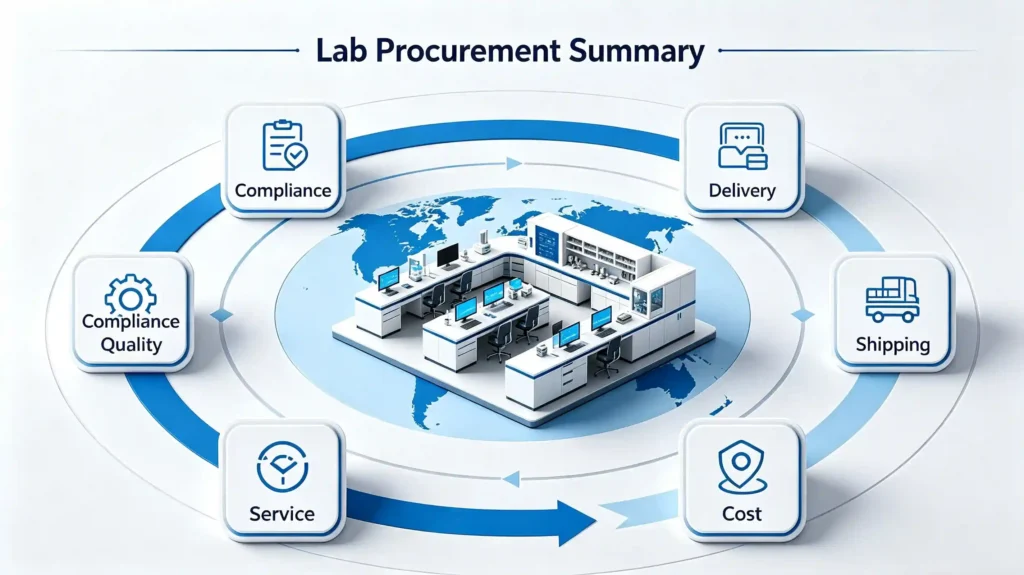
For international buyers, the core of laboratory furniture procurement lies not in comparing the lowest prices, but in accurately identifying project requirements, selecting compliant laboratory furniture manufacturers, and matching product selections to specific scenarios—thereby effectively mitigating the four major cross-border procurement risks: quality, compliance, logistics, and after-sales service.
For manufacturing companies expanding overseas, the key to deepening their presence in global markets lies in adhering to international standards. Lab-WB continues to refine its brand presentation, product compliance, cross-border delivery, and overseas after-sales service systems to align with international procurement processes and practices, thereby consistently securing a wide range of laboratory engineering projects worldwide.
X. Frequently Asked Questions (FAQ)
Q1: What are the most critical acceptance criteria for international procurement of laboratory furniture?
A: Priority should be given to meeting the industry access standards and safety regulations of the project’s host country. Secondarily, the furniture must meet the corrosion resistance, load-bearing capacity, explosion-proof, and cleanliness requirements of the laboratory environment. Additionally, product certifications must be verifiable, materials must match those specified in the contract, and delivery and after-sales terms must be clearly defined.
Q2: For large-scale overseas laboratory projects, should we choose international brands or direct-from-manufacturer export factories?
A: For top-tier high-end R&D and flagship pharmaceutical projects, international brands are a suitable choice. For most overseas university, testing, and biopharmaceutical projects, Lab-WB offers distinct advantages: compliance with international standards, high cost-effectiveness, flexible customization, and a mature delivery and cross-border after-sales support system.
Q3: What official documents are generally required for exporting laboratory furniture?
A: Basic documents include customs declarations, packing lists, invoices, and certificates of origin; supplementary documents include test reports and product certification documents. Some countries may require additional documents such as fumigation certificates and compliance statements.
Q4: What is the approximate international delivery lead time for custom laboratory furniture?
A: Production of standard products takes 7–15 days, while turnkey custom projects take 15–30 days, including customs clearance. Lab-WB employs standardized production scheduling to consistently manage delivery times and ensure projects are completed on schedule.
Q5: What are the key factors international buyers prioritize when purchasing laboratory furniture?
A: Overseas buyers prioritize international compliance certifications, the manufacturer’s project capabilities, delivery reliability, cross-border delivery services, and warranty and after-sales support. Price is only a secondary consideration; quality and safety are the core priorities in procurement.
XI. Reference Sources
1. Dataintelo Global Laboratory Furniture Market Report 2026–2030 (global market share and analysis of leading manufacturers)
2. Global Lab Supply Industry Official Ranking 2026 (comprehensive list of international laboratory furniture brands)
3. SEFA Laboratory Furniture Industry Standard Document (international compliance standards for the laboratory furniture industry)
4. Intel Market Research: Overseas Laboratory Engineering Procurement Guide (rules for cross-border engineering procurement)